



Planning filming in Hong Kong requires a clear understanding of local regulations, work visa requirements, location access, production logistics, crew resources, and the creative opportunities the city offers. As one of Asia’s most iconic filming destinations, Hong Kong combines dense urban landscapes, harbor views, mountains, beaches, international business districts, cinematic street life, and strong production infrastructure.
Shoot In China, based in Shanghai since 2012, provides bilingual video production and filming support across China, Hong Kong, and the Greater Bay Area. We work with international brands, agencies, media organizations, corporate clients, and filmmakers, helping them navigate local production needs while maintaining international production standards.
Whether you are shooting a commercial, documentary, corporate film, branded content, interview, event video, fashion shoot, or cross-border production, this guide outlines what you should know before filming in Hong Kong.
Why Choose Filming in Hong Kong?
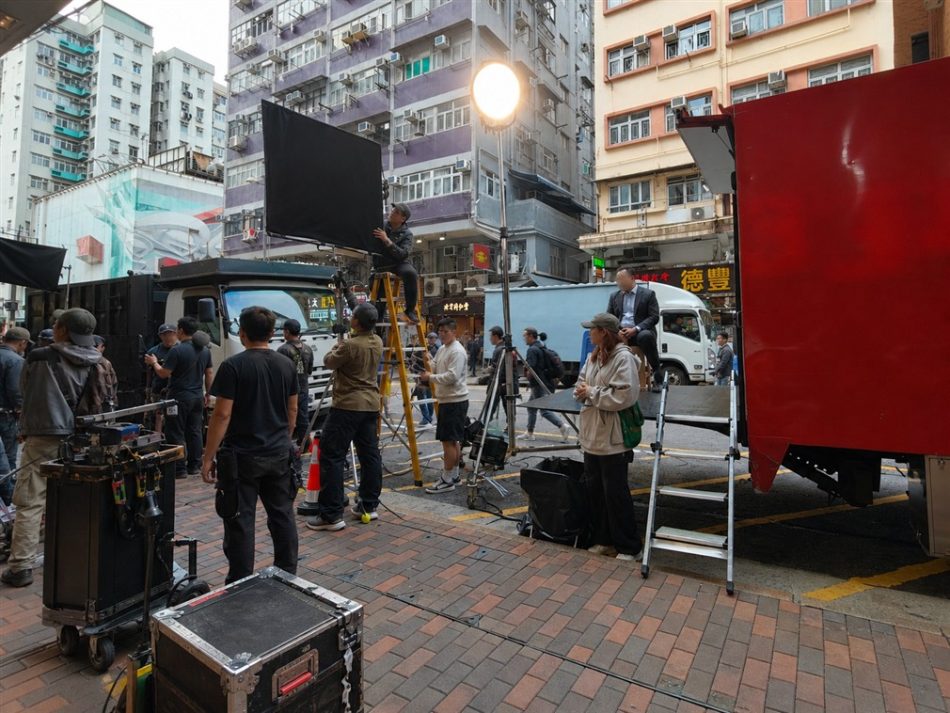
Hong Kong offers several advantages compared with many other production cities in Asia. The city is compact, highly connected, visually rich, and internationally oriented. For overseas producers, Hong Kong is often easier to work in than many mainland Chinese cities because English is widely used in business, hotels, agencies, legal services, and many production environments.
Hong Kong is also visually distinctive. Within a relatively small area, productions can access financial districts, dense residential neighborhoods, neon streets, harbor views, mountain roads, beaches, islands, luxury hotels, shopping malls, rooftop venues, industrial buildings, and traditional markets.
This makes Hong Kong especially useful for productions that need a strong Asian city identity, international business visuals, financial themes, luxury environments, street energy, or cinematic urban density.
What Productions Work Well in Hong Kong?
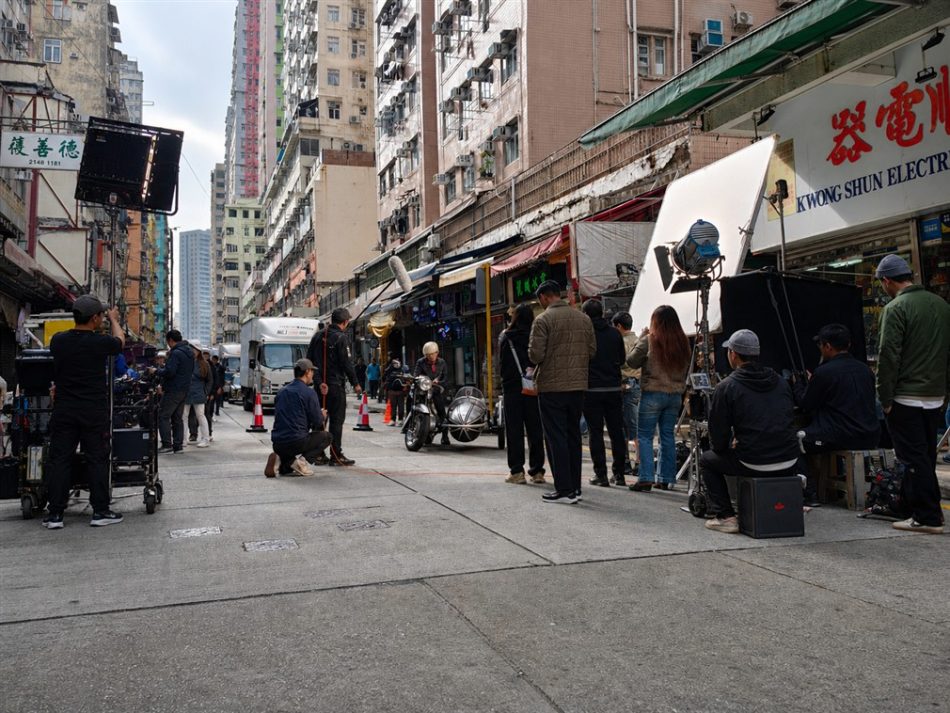
Hong Kong is suitable for many types of production, including:
- Corporate videos and executive interviews
- Commercials and branded content
- Finance, banking, legal, insurance, and business stories
- Fashion, beauty, and luxury shoots
- Documentary and cultural stories
- Street, lifestyle, and travel content
- Event and conference filming
- Product launches and PR videos
- Entertainment and celebrity-related content
- Cross-border business stories involving Hong Kong and mainland China
- Greater Bay Area productions involving Shenzhen, Guangzhou, or other nearby cities
Hong Kong is particularly strong when the production needs international business context, English-speaking support, premium hotel environments, city skyline visuals, or a mix of urban and natural locations within a short travel distance.
Hong Kong’s Production Resources and Crew
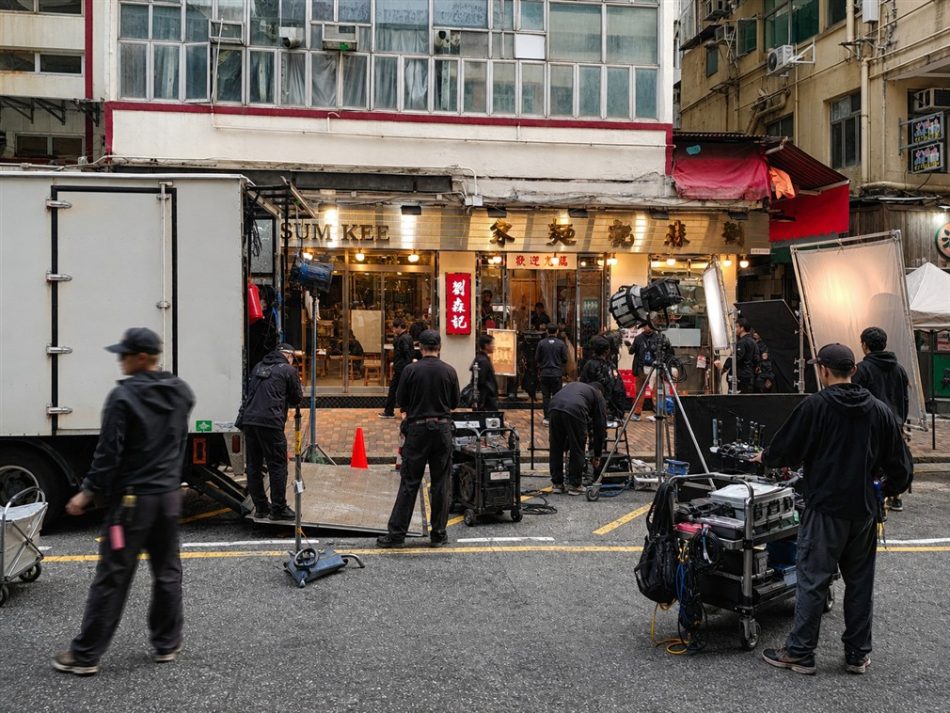
Hong Kong has a long history in film, television, advertising, and commercial production. The city has experienced directors, cinematographers, camera operators, producers, gaffers, grips, sound recordists, art department crew, stylists, makeup artists, photographers, editors, post-production teams, and production managers.
Compared with many mainland cities, Hong Kong crews are generally more familiar with international production workflows, English communication, agency-side expectations, call sheets, insurance requirements, release forms, usage terms, and client-facing production standards.
Common local production roles include:
- Producers and production managers
- Directors and DOPs / cinematographers
- Camera operators and camera assistants
- Gaffers and lighting teams
- Grips and equipment assistants
- Sound recordists and boom operators
- Makeup artists, stylists, and wardrobe support
- Art department and props support
- Location managers and fixers
- Production assistants and runners
- Photographers and BTS crew
- Drone teams, where legally possible
Hong Kong crew costs are usually higher than in many mainland Chinese cities, but the city’s efficiency, compact geography, English communication, and production experience can often save time and reduce coordination risks.
Language and Communication
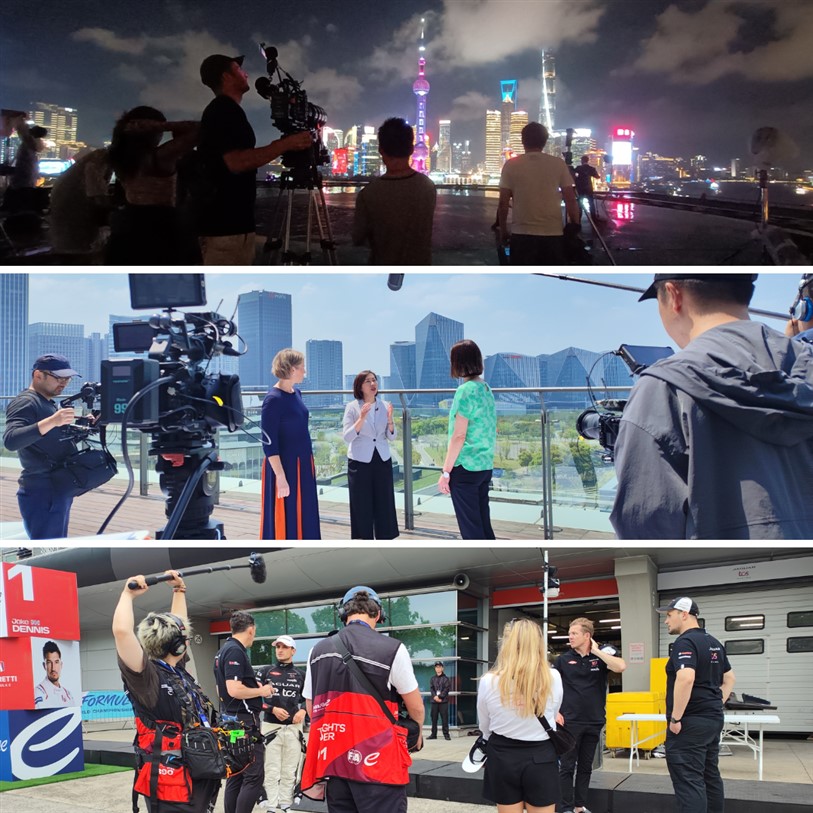
One of Hong Kong’s biggest advantages is communication. English is widely used in business, hotels, production, legal paperwork, finance, agencies, and many client-facing environments. Cantonese is the main local language, while Mandarin is also commonly understood in many business and cross-border contexts.
For international productions, Hong Kong is generally easier for communication than most mainland Chinese cities. However, bilingual production support is still useful, especially when dealing with local vendors, public locations, taxi drivers, restaurants, markets, older buildings, community locations, or cross-border planning with mainland China.
If a shoot involves both Hong Kong and mainland cities such as Shenzhen or Guangzhou, bilingual English-Chinese coordination becomes much more important.
Casting and Talent in Hong Kong
Hong Kong has good casting resources, especially for Cantonese-speaking talent, English-speaking talent, presenters, actors, models, lifestyle talent, corporate contributors, and international business profiles.
For commercials, branded content, fashion, beauty, luxury, finance, and corporate productions, Hong Kong can provide a stronger talent pool than many mainland cities, especially when English-speaking or internationally styled talent is required.
Casting options may include:
- Professional actors
- Commercial models
- Presenters and hosts
- Voiceover artists
- Lifestyle talent
- Corporate-looking talent
- Cantonese-speaking talent
- English-speaking talent
- Mandarin-speaking talent
- Real people and documentary contributors
- International and mixed-background talent
However, Hong Kong is a smaller market than mainland China, so for very specific casting needs, productions may also consider talent from Shenzhen, Guangzhou, Shanghai, Beijing, Taiwan, Singapore, or other regional markets. Usage fees, buyouts, territory, duration, category exclusivity, and media rights should be discussed clearly before booking talent.
Work Visa and Entry Requirements for Filming in Hong Kong
Hong Kong is more open and internationally connected than many mainland Chinese cities, but work visa and entry requirements should still be taken seriously.
Foreign crew, directors, camera operators, producers, performers, presenters, talent, or other working team members should not assume they can simply enter Hong Kong as visitors and carry out formal production work. Visitor status is generally not intended for taking up employment, whether paid or unpaid. For active production work, the visa or entry permit situation should be reviewed before travel.
Requirements depend on nationality, role, length of stay, project type, payment structure, employer or client relationship, and whether the person is working, performing, appearing on camera, attending meetings, scouting, or providing professional services.
For formal commercial, broadcast, branded, entertainment, or paid production work, crews should check with Hong Kong Immigration, a visa specialist, or a local production partner before travel. Depending on the case, an employment-related entry permit or another suitable arrangement may be required.
For short-term production activity, planning should start early. Productions may need to prepare:
- Project details
- Invitation letters
- Crew roles
- Shooting dates
- Location information
- Employer or sponsor details
- Supporting company documents
- Talent or performer information where relevant
Simple location scouting, meetings, or non-working business visits may be different from active shoot days. However, once a person is actively working on a production in Hong Kong, especially as crew, talent, presenter, performer, or paid service provider, the visa situation should be reviewed carefully.
Shoot In China can help international clients understand what information may be needed and coordinate with local partners where possible, but visa approval should never be assumed and should always be checked before travel.
Permits and Regulations for Filming in Hong Kong
One of the most important aspects of filming in Hong Kong is understanding location access and permit requirements. Hong Kong is generally more transparent and production-friendly than many locations, but permission still depends on where, how, and what you are filming.
Smaller crews may be able to work more easily in certain situations, but larger commercial projects, street setups, public space filming, drone filming, road impact, lighting setups, crowd control, branded content, or filming inside managed properties usually require coordination.
Approvals should never be assumed. Location access, permits, insurance, and safety requirements should be checked early.
Public Location Filming
Many public areas in Hong Kong may require permission from relevant government departments, venue operators, or property managers.
These may include:
- Public streets and sidewalks
- Parks and recreational spaces
- Government-managed venues
- Transport areas
- Waterfront areas
- Markets and public facilities
- Roads or areas where filming affects pedestrians or traffic
Depending on the scale of the shoot, productions may need to provide:
- Shooting schedule
- Crew size
- Equipment list
- Public liability insurance
- Risk assessment or safety plan
- Traffic or pedestrian management plan
- Location map
- Details of lighting, grip, vehicles, or special effects
- Police or transport coordination where relevant
For small handheld documentary-style filming, the process may be simpler, but it still depends on the exact location and activity.
Private Property Permissions
Commercial filming inside shopping malls, hotels, offices, restaurants, residential buildings, rooftops, private clubs, industrial buildings, studios, and commercial venues requires permission from the property owner or venue manager.
Private location approvals usually involve:
- Location fees
- Written agreement
- Insurance requirements
- Shooting time restrictions
- Loading and lift access
- Noise restrictions
- Security requirements
- Brand or signage control
- Crew and equipment limitations
Hong Kong has many privately managed spaces, so a local fixer or production manager can be very useful for negotiating access, checking rules, and avoiding delays.
Drone Filming Regulations in Hong Kong
Drone filming in Hong Kong is regulated by the Civil Aviation Department. Productions should not assume drone filming is possible without checking the exact location, airspace, purpose, drone category, operator requirements, and approval process.
Drone work may involve restrictions around:
- Airports and flight paths
- Dense urban areas
- Crowds and roads
- Government or sensitive buildings
- Harbors and waterfronts
- Private properties
- Night operations
- Insurance and safety requirements
Working with experienced and properly qualified drone operators is strongly recommended. If drone filming is difficult or not practical, alternatives may include high-floor shooting, rooftop access where permitted, licensed stock footage, cranes, jibs, gimbals, or filming from approved viewpoints.
Location Options in Hong Kong
One of the biggest advantages of filming in Hong Kong is the diversity of locations available within a compact area. Productions can achieve multiple looks in one city if logistics are planned properly.
Urban Cityscapes
Hong Kong is famous for its dense urban look. Central, Admiralty, Wan Chai, Causeway Bay, Tsim Sha Tsui, Mong Kok, Sham Shui Po, and other districts offer high-rise buildings, streets, markets, neon, traffic, footbridges, and layered city visuals.
Financial and Corporate Environments
Central, Admiralty, Quarry Bay, Kowloon East, and other business districts are strong for finance, legal, corporate, insurance, banking, and professional services content.
Harbor and Skyline Views
Victoria Harbour, Tsim Sha Tsui waterfront, Central waterfront, West Kowloon, and selected rooftop or high-floor locations can provide strong skyline visuals. Access and filming rules depend on the exact site.
Luxury and Commercial Locations
Hong Kong has many luxury hotels, shopping malls, retail spaces, restaurants, private clubs, showrooms, and premium office towers suitable for fashion, beauty, lifestyle, luxury, and client-facing productions.
Traditional and Local Neighborhoods
Markets, old streets, wet markets, temples, residential blocks, cha chaan tengs, industrial buildings, and local neighborhoods can provide authentic Hong Kong character. These locations require careful local coordination because of crowds, space limitations, and property ownership.
Natural Landscapes
Hong Kong also offers beaches, mountains, islands, hiking trails, country parks, reservoirs, and coastal roads. Sai Kung, Lantau Island, Stanley, Repulse Bay, Tai Tam, and other areas can provide nature and lifestyle visuals within reach of the city.
Industrial and Practical Locations
Industrial buildings, warehouses, logistics spaces, workshops, and older commercial buildings can be useful for specific production needs. Access, lifts, loading, sound, and safety should be checked in advance.
Studio Rental in Hong Kong
Hong Kong has studio options for interviews, product shoots, livestreams, photography, e-commerce, green screen, tabletop filming, and controlled commercial setups. Studios can be very useful when the project needs stable sound, controlled lighting, privacy, high-speed internet, makeup space, client holding areas, or weather protection.
Studio options may include:
- Interview studios
- Photo studios
- Product and tabletop spaces
- Green screen studios
- Livestream studios
- Small commercial studios
- Sound-controlled spaces
- Rooftop or lifestyle studios
Because Hong Kong has high real estate costs, studio spaces can be more expensive and sometimes smaller than those in mainland China. It is important to check ceiling height, loading access, power, sound control, parking, client area, makeup space, and whether outside equipment or catering is allowed.
For larger stages, set builds, or more cost-sensitive studio production, Shenzhen, Guangzhou, or other mainland cities may be worth comparing depending on the project.
Equipment Rental in Hong Kong
Hong Kong offers strong equipment rental infrastructure. Productions can access professional camera, lighting, grip, sound, monitoring, and production equipment.
Common options may include:
- Cinema cameras from ARRI, RED, Sony, Canon, Blackmagic, and other systems
- Cinema lenses, zooms, and specialty optics
- Professional lighting and grip equipment
- Portable interview kits
- Wireless video and client monitoring
- Sound recording packages
- DIT and backup support
- Livestreaming equipment
- Gimbals, sliders, jibs, and selected specialty rigs
Early booking is recommended for high-demand equipment, especially during busy commercial production periods, major events, and regional shoots. Some specialist gear may also be sourced from mainland China or other regional markets depending on availability and budget.
Bringing Equipment into Hong Kong or Mainland China
Hong Kong is generally convenient for international travel and logistics, but equipment planning still matters. If a production is filming only in Hong Kong, the process may be more straightforward than bringing equipment into mainland China.
However, if the shoot involves both Hong Kong and Shenzhen, Guangzhou, or other mainland cities, equipment movement must be planned carefully. Hong Kong and mainland China have different customs systems, and gear does not simply move freely across the border without proper handling.
For cross-border productions, crews should check:
- ATA Carnet requirements
- Temporary import procedures
- Equipment lists and serial numbers
- Declared values
- Freight forwarder or customs broker needs
- Border crossing timing
- Vehicle and driver arrangements
- Whether it is easier to rent separately in Hong Kong and mainland China
For many productions, a hybrid approach may work best: rent certain items in Hong Kong, source some equipment in Shenzhen or Guangzhou, and avoid unnecessary cross-border equipment movement.
Weather and Seasons in Hong Kong
Hong Kong has a subtropical climate. It is warm and humid for much of the year, with hot summers, rainy periods, and possible typhoon disruptions.
Spring
Spring can be warm, humid, and sometimes foggy or rainy. Visibility may vary, which can affect skyline, harbor, or drone-style shots.
Summer
Summer is hot, humid, and often rainy. Outdoor filming can be physically demanding for crew and talent. Productions should prepare water, shade, cooling breaks, makeup support, and weather backup plans.
Rainy Season and Typhoons
Heavy rain and typhoons can disrupt filming, especially for exterior shoots, marine locations, rooftop work, drone filming, or travel between islands and districts. Weather backup plans are important during the summer and typhoon season.
Autumn
Autumn is often one of the best times to film in Hong Kong. The weather is generally more comfortable, visibility can improve, and outdoor shoots are easier to manage.
Winter
Winter is mild compared with northern China, though it can be cool, damp, or windy. It is generally a practical season for corporate videos, interviews, street filming, and outdoor work.
For Hong Kong productions, the main weather risks are heat, humidity, heavy rain, typhoons, and changing visibility.
Internet, Online Tools and Communication
Hong Kong has fewer internet restrictions than mainland China. Google, Gmail, Google Drive, YouTube, Vimeo, WhatsApp, Instagram, Facebook, X, ChatGPT, and other international platforms generally work normally in Hong Kong.
This is a major advantage for international productions that rely on cloud storage, remote approvals, live calls, client review links, AI tools, Google Docs, YouTube references, Vimeo links, and international messaging apps.
However, if the production crosses into Shenzhen or mainland China, the internet environment changes immediately. Mainland China has different access restrictions, and many international platforms may not work normally there. For cross-border shoots, file transfer, communication, and remote approval workflows should be planned separately for Hong Kong and mainland China.
Payment System and Currency
Hong Kong uses Hong Kong dollars. Credit cards are widely accepted in hotels, restaurants, shopping malls, rental houses, and many professional services. Bank transfer is also common for production vendors, agencies, and corporate clients.
Cash is still useful for smaller local expenses, taxis, markets, and some traditional vendors. Digital payments are also common, but Hong Kong’s payment environment is different from mainland China.
For cross-border shoots, payment planning is important. Hong Kong uses HKD and international payment systems, while mainland China uses RMB and relies heavily on Alipay and WeChat Pay. A production that films in both Hong Kong and Shenzhen should prepare for both systems.
Hotels, Catering and Daily Costs
Hong Kong has a wide range of hotels, from business hotels to luxury international properties. However, hotel rooms can be smaller and more expensive than in many mainland Chinese cities, especially in Central, Admiralty, Tsim Sha Tsui, Causeway Bay, and other prime areas.
Hotel prices can rise during trade fairs, conferences, financial events, major holidays, and peak travel periods. Early booking is recommended.
Catering and food options are strong in Hong Kong. Productions can arrange local crew meals, boxed lunches, coffee service, vegetarian options, Western meals, Chinese food, hotel catering, premium client meals, and event-style catering. Dietary requirements are generally easier to manage than in many mainland cities, but they should still be confirmed in advance.
Daily production costs in Hong Kong are usually higher than in Shenzhen, Guangzhou, Chengdu, or many other mainland cities. However, the city’s efficiency, English communication, compact geography, and international infrastructure may offset some of the higher costs.
Transportation and Scheduling
Hong Kong is compact but dense. Public transport is efficient, taxis are widely available, and many locations are relatively close by distance. However, production transport still requires careful planning because of traffic, parking, loading restrictions, narrow streets, building access, and crowded districts.
For small crews, taxis and ride-hailing options may be enough for simple movements. For equipment-heavy shoots, vans with drivers are recommended.
Production scheduling should consider:
- Traffic during peak hours
- Loading and unloading access
- Building lift restrictions
- Parking permits or waiting areas
- Crew movement between Hong Kong Island, Kowloon, and New Territories
- Ferry or island travel where relevant
- Weather delays
- Street crowd levels
- Night shooting restrictions
- Location-specific access times
Many productions cluster locations geographically to maximize shooting efficiency.
Hong Kong and Shenzhen Cross-Border Production
One of Hong Kong’s biggest strategic advantages is its proximity to Shenzhen and the wider Greater Bay Area. For international productions, Hong Kong can provide stronger English communication, international production experience, casting resources, agency-side support, premium locations, and global business context.
Shenzhen, meanwhile, offers easier access to mainland technology companies, factories, hardware supply chains, lower hotel costs, and broader manufacturing stories.
A cross-border Hong Kong–Shenzhen production can be very effective for projects involving:
- Finance and technology
- Cross-border business
- Manufacturing and supply chains
- Consumer electronics
- Logistics and trade
- Greater Bay Area development
- Corporate interviews across both markets
- Hong Kong headquarters and mainland factory stories
However, cross-border filming requires planning. Visas, work permissions, travel time, border crossings, customs, equipment movement, payment systems, internet access, and crew scheduling should be checked before confirming the production plan.
Filming in Hong Kong vs Mainland China and Singapore
Many producers compare Hong Kong with Shanghai, Beijing, Shenzhen, Guangzhou, and Singapore.
Compared with mainland Chinese cities, Hong Kong usually offers fewer language barriers, easier access to international internet platforms, more familiar legal and business processes, and stronger English-speaking production support. However, costs may be higher, especially for hotels, locations, crew, and studio space.
Compared with Shenzhen, Hong Kong offers stronger creative crew, casting, international production standards, and English communication. Shenzhen offers lower costs, mainland factory access, technology companies, and stronger hardware supply chain connections.
Compared with Shanghai or Beijing, Hong Kong is more compact and internationally accessible, but Shanghai and Beijing may offer larger mainland market access and broader crew or location options depending on the production type.
Compared with Singapore, Hong Kong has a more visually dense, cinematic, layered urban character, with stronger contrast between finance, street life, harbor, mountains, and older neighborhoods. Singapore may be more controlled and orderly, while Hong Kong often feels more textured and cinematic.
Public Holidays and Busy Periods
Hong Kong can become busy during public holidays, major conferences, trade fairs, financial events, tourism peaks, and large public events. Hotel prices, location access, transport, and crew availability can be affected.
Productions should pay attention to:
- Lunar New Year
- Easter holidays
- Golden Week travel periods
- Christmas and New Year
- Major trade fairs
- Financial conferences
- Large concerts or public events
- Weather-related disruptions during typhoon season
Early booking is recommended for hotels, crew, studios, equipment, and popular locations.
Practical Tips Before Filming in Hong Kong
Before filming in Hong Kong, it is useful to prepare the following:
- Check work visa or entry permit requirements for foreign crew, directors, camera operators, performers, presenters, and paid production staff before travel
- Confirm whether your locations are public, private, government-managed, or commercially managed
- Check whether filming permits, venue approval, insurance, or risk assessments are required
- Book popular locations, hotels, crew, and equipment early
- Check studio size, loading access, sound control, internet, and client facilities
- Plan casting early, especially for specific language, ethnicity, age, or usage requirements
- Discuss talent usage terms, territory, duration, exclusivity, and buyouts clearly
- Check drone feasibility before promising aerial shots
- Prepare for heat, humidity, heavy rain, and typhoon risks
- Plan transport around traffic, loading, parking, and building access
- Prepare separate workflows if filming in both Hong Kong and mainland China
- Check equipment movement if crossing into Shenzhen or other mainland cities
- Prepare both HKD and RMB payment plans for cross-border shoots
- Test file delivery, livestream, and remote approval workflows before shoot days
Hong Kong is one of Asia’s most practical and visually rich production cities, but it still requires good planning. With the right local support, it can offer strong crew resources, international communication, efficient logistics, and a wide range of cinematic locations.
How Shoot In China Supports Filming in Hong Kong
Choosing the right production partner can make filming in Hong Kong much easier, especially for international teams or cross-border productions involving mainland China.
Shoot In China provides production support for Hong Kong, Shenzhen, Guangzhou, Shanghai, Beijing, Chengdu, and other major Chinese cities.
Our Hong Kong production services include:
- Bilingual production management
- Local crew sourcing
- DOP, camera crew, lighting, sound, and production support
- Casting and talent coordination
- Location scouting and access coordination
- Permit guidance and documentation support where needed
- Work visa and entry requirement coordination with local partners where possible
- Equipment rental and sourcing
- Studio booking
- Hotel, transport, and catering coordination
- Drone feasibility checks where legally possible
- Cross-border production planning between Hong Kong and mainland China
- Post-production, translation, subtitling, and file delivery
Since 2012, Shoot In China has supported international brands, agencies, media companies, and filmmakers with bilingual crews, fixer services, equipment rental, production logistics, and filming support across China and Hong Kong.
Get Started with Filming in Hong Kong
If you are planning filming in Hong Kong, preparation and local expertise will help ensure a smoother production process. Whether you need a local camera crew, a bilingual producer, location support, casting, equipment rental, studio booking, work visa coordination, or cross-border planning between Hong Kong and mainland China, Shoot In China can help.
Contact our team to discuss your next project and learn how we can support your filming goals in Hong Kong.
Email: [email protected]d discover how we can support your filming goals in Hong Kong.