



Drone filming in China has entered a new phase. On 14 May 2026, China’s updated national unmanned aircraft airspace maps came into effect across multiple provinces and municipalities. For international producers, documentary teams, commercial crews, and branded content agencies, this is an important change: drone filming is becoming more transparent, more map-based, and in many locations, easier to plan before production begins.
However, this does not mean drones can now be flown freely everywhere. China’s drone rules still require careful location checking, real-name registration, UOM airspace review, possible flight reporting, and respect for controlled or restricted zones.
The biggest practical rule remains clear: most civilian drone operations are limited to 120 metres above ground level, unless a separate approval applies.
For overseas production teams, the key message is simple:
China is opening more low-altitude space for compliant drone work, but every drone shot still needs to be checked locally before the shoot.
For a broader overview of the latest China drone regulations, producers can also read our updated guide covering airspace classification, UOM checks, registration, and low-altitude filming rules.
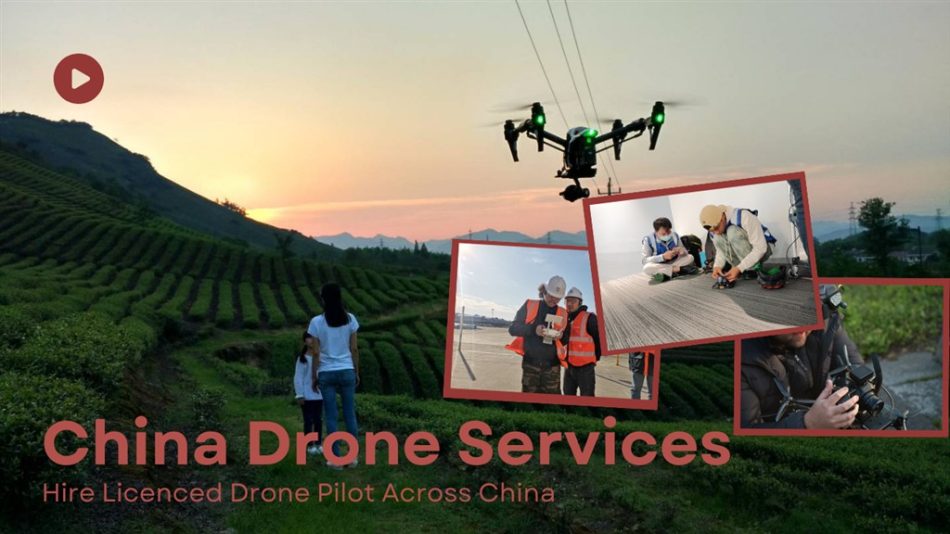
What Changed in the 2026 China Drone Airspace Update?
The 2026 update marks a shift from broad, conservative restrictions toward a more precise airspace management system. Instead of treating large parts of cities as unclear or fully off-limits, many areas are now divided more visibly into suitable flying zones and controlled zones.
In practical production terms, this means aerial filming in China is now easier to assess before a shoot. A local producer, fixer, or licensed drone pilot can check the exact location in advance, identify whether the area is suitable, controlled, or restricted, and advise whether the shot is realistic.
This is useful for foreign crews because drone feasibility in China depends heavily on exact location. A city name is never enough. A shot in outer Shanghai, suburban Chengdu, coastal Shenzhen, or rural Guangxi may be much easier to plan than a shot near an airport, government building, military area, port, or dense city centre.
The main change is not simply “more places to fly.” The real benefit is clearer pre-production planning.
Why This Matters for International Productions
For foreign production teams, drone filming in China has often been difficult because rules could feel unclear from the outside. A location might look simple in a treatment, storyboard, or client reference, but the actual shoot could be affected by airports, military zones, major events, temporary controls, public security concerns, or sensitive infrastructure.
The updated airspace map system does not remove those issues, but it makes the first stage of planning more practical.
Before confirming drone shots, producers can now ask the local team to check:
- whether the location is inside a suitable flying zone;
- whether the area falls within controlled airspace;
- whether a flight report or approval is needed;
- whether the 120m altitude limit affects the shot;
- whether nearby sensitive sites may create additional risk;
- whether a licensed local drone pilot should be used.
This is especially useful for commercial shoots, documentaries, corporate videos, branded content, industrial films, factory profiles, tourism campaigns, and city B-roll packages.
For international agencies, the benefit is simple: drone filming can be discussed earlier, checked more accurately, and built into the production schedule with fewer surprises.
The 120-Metre Rule: The Main Creative Limitation
The most important creative limitation is the 120-metre altitude cap. In many suitable flying zones, drone operations are still limited to 120 metres above ground level.
For many production needs, this is enough. Factory exteriors, corporate campuses, riverside movement, road tracking shots, industrial parks, tourism locations, and city texture can often be captured within this limit.
But producers should not expect extremely high “god’s-eye view” drone shots unless a separate approval route is available. Mountain landscapes, wide city panoramas, large industrial sites, and dense urban skylines may look different from older aerial references that were shot at much higher altitudes.
This affects creative planning. Directors and DPs should think less in terms of extremely high aerial shots and more in terms of controlled, cinematic low-altitude movement.
Useful approaches include:
- slow push-ins over factory entrances;
- lateral movement along rivers or coastlines;
- reveals from trees, roads, or rooftops;
- building-level tracking shots;
- low-altitude city texture;
- controlled campus or industrial flyovers;
- scenic movement within legal altitude limits.
For commercial and corporate production, this can still look very strong. But it needs to be planned properly.
Shanghai Drone Filming: Possible, But Still Highly Location-Specific
Shanghai remains one of the most important production cities in China, but it is still heavily controlled in core areas. Locations such as the Bund, Lujiazui, People’s Square, major transport hubs, and areas close to government, aviation, military, or sensitive infrastructure should be treated carefully.
Drone filming in Shanghai is more realistic in selected outer districts, suburban areas, industrial zones, non-sensitive waterfronts, and controlled private locations. Areas such as Qingpu, Songjiang, Lingang, Chongming, and some non-core riverside locations may offer more practical options depending on the exact coordinates.
That said, Shanghai drone filming should never be assumed. The city is dense, sensitive, and closely managed. A location that looks open visually may still sit inside a controlled zone.
For productions planning aerial filming in Shanghai, our separate guide to drone regulations in Shanghai explains how the rules may affect shoots around the Bund, Lujiazui, riverside areas, outer districts, and commercial locations.
The safest approach is to send exact location pins to your local production partner before confirming any drone shot.
Guangzhou and Shenzhen: Stronger Options in the Greater Bay Area
Guangzhou and Shenzhen are increasingly important for commercial, technology, manufacturing, automotive, corporate, and branded content shoots. The Greater Bay Area offers modern skylines, ports, technology campuses, factories, logistics hubs, coastlines, highways, and dense urban textures.
The 2026 airspace update may make some low-altitude drone filming easier to assess in both cities, especially outside the most sensitive downtown, airport, port, and government-related zones.
For Shenzhen, drone filming may be more realistic in selected coastal, suburban, technology park, and non-sensitive commercial areas. However, districts such as Futian, Nanshan, Qianhai, and airport-adjacent areas still require careful checks.
For Guangzhou, aerial filming may be practical in selected riverside, suburban, industrial, or outer district locations, but central areas around major landmarks, transport routes, or public security-sensitive sites should be reviewed carefully.
For international crews, the opportunity is real, but the rule remains the same: check the exact location before promising the shot to the client.
Chengdu, Sichuan, Guangxi, Jiangxi, Hubei, and Hunan: More Practical for Scenic and Regional Shoots
Several inland and scenic regions appear to benefit significantly from the updated map system. Provinces with mountains, rivers, tourism areas, ancient towns, industrial parks, and open landscapes may become more practical for legal aerial filming.
This matters for documentary, travel, tourism, cultural, and regional corporate projects.
Locations in Sichuan, Guangxi, Jiangxi, Hubei, and Hunan may offer stronger drone filming possibilities than before, especially when shooting:
- rivers and lakes;
- mountains and valleys;
- ancient towns and villages;
- tourism destinations;
- factories and industrial parks;
- regional cityscapes;
- logistics and infrastructure stories;
- agricultural or environmental subjects.
However, scenic does not automatically mean unrestricted. Cultural heritage sites, national parks, protected areas, reservoirs, power facilities, bridges, railways, airports, and border-related areas may still have restrictions.
For foreign producers, these regions may offer excellent visual potential, but they still require professional local coordination.
What Has Not Changed?
The 2026 update should not be misunderstood as full deregulation. Several important restrictions remain.
First, airports, military zones, government areas, border regions, ports, power plants, railways, major bridges, transport hubs, confidential units, hazardous facilities, and sensitive public sites remain highly controlled.
Second, real-name registration and traceability matter. China’s UOM system is central to compliant drone operation. Depending on the aircraft, location, and operation type, flight reporting or approval may be required.
Third, temporary restrictions can still apply. Even if a location appears suitable on the map, major events, government activities, weather, public security operations, or temporary notices can affect whether flying is possible.
Fourth, foreign crews should not operate drones casually on their own. Even when a drone is technically allowed, a local licensed operator is usually the safer choice for professional production.
Because China drone laws are location-specific and can change with temporary restrictions, overseas crews should always confirm the latest map status before filming.
Practical Advice for Producers Planning Drone Filming in China
For international producers, the best approach is to treat drone work as a normal pre-production item, not a last-minute add-on.
Before confirming drone shots, prepare the following information for your local production partner:
1. Exact Location Pins
A general city name is not enough. Drone feasibility depends on the exact coordinates. Send map pins for each proposed take-off point, filming direction, and subject area.
2. Shot Purpose and Direction
A short description helps the local team assess whether the camera will face sensitive areas. For example, filming a factory courtyard is different from flying toward a port, airport, government building, or military-related site.
3. Preferred Altitude and Movement
Since 120 metres is the key limitation, the DP should plan realistic aerial movement within that range. If a shot requires a much higher altitude, it should be discussed early.
4. Date and Time Window
Temporary restrictions may affect feasibility. Morning, evening, weekend, major event days, or politically sensitive dates may be treated differently.
5. Aircraft Type and Pilot Details
The drone model, registration status, pilot qualification, and insurance may be needed. Professional crews should avoid relying on informal drone operation.
6. Client Usage and Sensitivity
Corporate, government, industrial, port, shipyard, energy, infrastructure, or automotive-related shoots may require extra care. Some clients may also have their own internal drone safety rules.
How the New Rules Affect Production Budgets
The updated airspace system may reduce uncertainty in some cities, but it does not remove the need for professional coordination.
Drone filming budgets in China may still include:
- licensed drone pilot;
- drone equipment;
- location checking;
- UOM airspace review;
- flight reporting or approval coordination;
- production management;
- safety coordination;
- insurance;
- travel time if the legal flying area is outside the city core;
- backup plans for weather or airspace changes.
For simple suburban, scenic, or private-location B-roll, costs may be manageable. For sensitive city-centre, industrial, port, shipyard, energy, airport-adjacent, or government-related locations, coordination can become more complex.
The best way to control cost is to check feasibility early. If drone shots are reviewed during pre-production, the team can design a realistic plan, avoid restricted locations, and schedule backup shots.
Creative Impact: Less Wild Flying, More Controlled Aerial Cinematography
The old style of informal, high-altitude, dramatic drone filming is becoming less acceptable. The new environment favours professional, lower-altitude, planned aerial cinematography.
This is not necessarily bad for production quality. Many stronger drone shots are not extremely high. A well-planned 60–120 metre movement can feel more cinematic than a very high static aerial.
For example, a drone can still be used effectively for:
- a slow reveal of a corporate campus;
- a controlled movement above a logistics yard;
- a riverside tracking shot;
- a factory entrance push-in;
- a coastline or mountain road movement;
- a city texture shot from a legal altitude;
- a dynamic opening shot for a documentary or branded film.
The key is to use drones as part of the visual language, not just as a “big view” tool.
Common Mistakes Foreign Crews Should Avoid
Assuming Online References Are Still Legal
Many older drone shots of Chinese cities were filmed under different conditions, or possibly without proper approval. Do not assume that a reference shot can be repeated legally today.
Asking for Drone Shots Too Late
Drone filming should be discussed during pre-production, not on the shoot day. Exact pins and timing should be checked before the schedule is locked.
Flying Near Landmarks Without Checking
Famous landmarks are often more sensitive than they appear. Even if they are outdoors and visually open, they may be inside controlled airspace.
Using a Non-Local Drone Operator
A foreign drone operator may not be familiar with UOM checks, local reporting, temporary restrictions, or sensitive airspace. A local licensed pilot is usually safer.
Ignoring Weather and Visibility
Airspace is only one part of the plan. Wind, rain, haze, visibility, and local safety conditions can still affect drone filming.
Best Use Cases for Drone Filming in China
Drone filming can still add strong production value to many types of shoots in China, especially when planned properly.
Good use cases include:
- corporate campus films;
- factory profile videos;
- industrial and manufacturing content;
- logistics and supply chain stories;
- tourism and destination films;
- documentaries;
- automotive and road visuals;
- environmental and agricultural stories;
- regional city B-roll;
- controlled private-location aerials;
- commercial establishing shots.
For more sensitive locations, such as ports, shipyards, airports, energy facilities, government-linked sites, and dense city centres, extra review is needed before confirming drone work.
Conclusion: More Practical, Not Casual
China’s 2026 drone airspace update is a significant change for film, commercial, corporate, and documentary production. It makes many low-altitude drone operations easier to evaluate and, in some regions, easier to carry out legally.
But it also reinforces a stricter compliance framework: real-name registration, UOM airspace checks, 120-metre altitude limits, traceable operations, and controlled zones around sensitive areas.
For international producers, the safest takeaway is this:
Drone filming in China is becoming more practical, but not casual. More locations may be possible, but every shot still needs a local airspace check before the shoot.
With proper planning, licensed local pilots, and accurate location checks, drone filming can still add strong production value to shoots across China, especially in outer city districts, scenic regions, industrial parks, coastal areas, riversides, and controlled corporate environments.
Drone Filming Support in China
At Shoot In China, we help international production teams plan drone filming across China with bilingual producers, local fixers, licensed drone pilots, location coordination, permit support, and on-the-ground production management.
Before each shoot, our team can help check the latest UOM airspace status, review local restrictions, and advise whether a proposed drone shot is realistic, compliant, or likely to require additional approval.
For more background, you can also read our updated guide to China drone regulations, our city-specific article on drone regulations in Shanghai, and our practical overview of China drone laws.
Whether you are filming a commercial, documentary, corporate video, factory profile, tourism film, or branded content project, our team can help assess drone feasibility and build a realistic aerial filming plan before your crew arrives.
Contact Shoot In China to discuss your drone filming requirements in China.