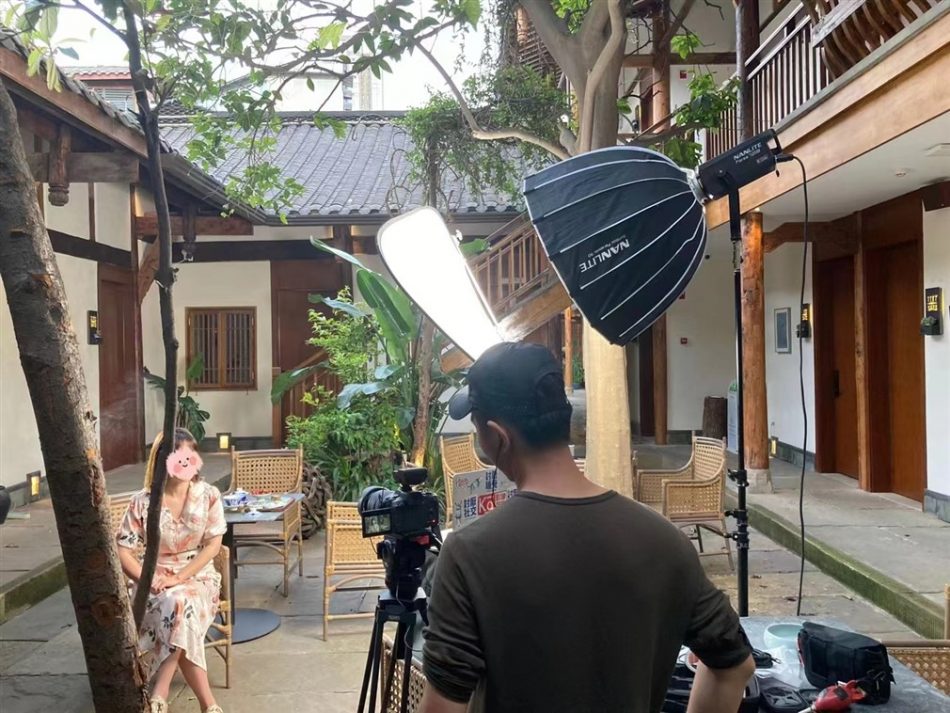



Planning to shoot a documentary in China can be both exciting and complicated. China offers powerful documentary subjects across culture, history, business, technology, manufacturing, science, architecture, food, travel, sports, and human-interest stories. But filming here requires more preparation than simply booking flights, bringing a camera crew, and arriving with a story idea.
Depending on your topic, broadcaster, locations, interviewees, crew size, equipment, and distribution plan, your production may need visa support, interview permissions, filming permits, local coordination, and careful risk assessment before the shoot begins.
At Shoot In China, we have supported international documentary crews, broadcasters, production companies, agencies, and corporate teams across China since 2012. This guide explains what foreign producers should know before filming a documentary in China, including visas, permits, fixer support, equipment planning, interview coordination, sensitive topics, and common mistakes to avoid.
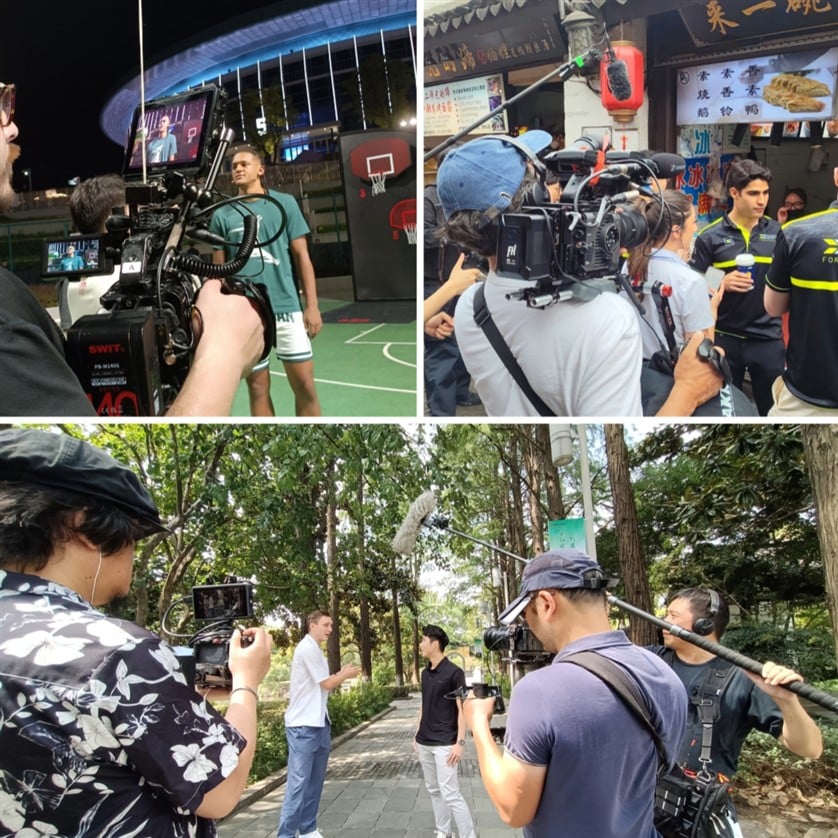
1. Understand What Type of Documentary You Are Filming
The first question is not only “Where are you filming?” but also “What kind of documentary are you making?”
Different documentary formats may require different levels of preparation. A branded documentary for a company will be very different from a current affairs film, a cultural travel story, or an investigative documentary.
Common documentary categories include:
- Broadcast documentary
- News or current affairs documentary
- Corporate documentary
- Branded documentary
- NGO or social issue documentary
- Cultural or travel documentary
- Science, technology, or manufacturing documentary
- Independent documentary
- Human-interest documentary
- Historical or location-based documentary
The subject matter matters. A documentary about food, design, architecture, factories, business, tourism, or culture may be relatively straightforward if the locations and contributors are properly arranged. A project involving politics, public policy, protests, religion, ethnic issues, military topics, border areas, or social controversy will require much more careful review.
Before planning the shoot, you should clearly define:
- The story angle
- The cities and locations
- The interview subjects
- The broadcaster, client, or platform
- The final usage and distribution
- The crew size
- The equipment list
- Whether the project involves sensitive topics
- Whether the content is journalistic, commercial, branded, or internal
This early review helps determine the right approach for visas, permits, contributors, and production logistics.
2. Check Visa Requirements Early
Visa planning is one of the most important parts of documentary filming in China.
For foreign journalists and crews conducting short-term news coverage, China’s official guidance states that a J-2 journalist visa is used for short-term reporting assignments. The International Press Center of China says foreign journalists conducting short-term news coverage should obtain consent from the organizations or individuals to be interviewed and apply for a J-2 visa in advance. The Chinese Embassy also describes the J-2 visa as being issued to foreign journalists going to China for short-term news coverage, with an intended stay of no more than 180 days.
However, documentary work can cover a wide range of formats. A news documentary, broadcast current affairs piece, corporate documentary, branded content project, internal company film, or cultural feature may not all be treated in the same way. The correct route depends on the project type, subject matter, sponsor, location, and distribution plan.
For this reason, it is better to review the project before travel rather than assuming that a tourist or business visa is enough.
For many documentary projects, you may need to prepare:
- A project synopsis
- A letter from the broadcaster, production company, or client
- A list of crew members
- A filming schedule
- Interviewee details
- Location information
- Equipment list
- Invitation or support letters
- Local contact details
Do not leave this until the final week. Visa and approval questions can take time, especially if the project involves media coverage, public institutions, government-related locations, sensitive subjects, or interviews with official organizations.
3. Prepare a Clear Documentary Treatment Before Production
A clear treatment is extremely useful when filming in China. It helps local producers, fixers, interviewees, venues, and authorities understand what you are trying to film and why.
Your treatment does not need to be overly long, but it should explain the project clearly and professionally.
A useful documentary treatment should include:
- Project title
- Short synopsis
- Main story angle
- Target audience
- Broadcaster, platform, client, or production company
- Key contributors or interviewees
- Cities and locations
- Visual style
- Interview topics
- Filming dates
- Crew size
- Equipment overview
- Drone requirements, if any
- Final usage and distribution
This document is especially important when asking for access to factories, schools, hospitals, research labs, ports, government-related spaces, museums, cultural sites, private companies, or public landmarks.
In China, many access decisions depend on trust. A clear treatment makes the project easier to explain, easier to approve, and easier to coordinate.
4. Work with a Documentary Fixer or Local Producer
A good documentary fixer in China does much more than translate.
A translator can help with language, but a professional fixer or local producer helps manage the whole production environment. They understand how to approach contributors, how to request access, how to communicate with locations, how to read local sensitivities, and how to solve practical problems on the ground.
A documentary fixer in China can help with:
- Research and pre-production
- Contributor outreach
- Interview scheduling
- Location scouting
- Permit coordination
- Local negotiation
- Translation and interpretation
- Crew booking
- Equipment rental
- Transport and logistics
- Release forms
- Risk assessment
- On-set communication
- Cultural guidance
- Problem-solving during production
This is especially important for documentary crews because the schedule can change quickly. Interviewees may cancel, locations may become unavailable, weather may shift, or a story may develop in a new direction during filming.
A local fixer gives the overseas producer more flexibility while reducing the risk of misunderstandings.
5. Secure Interview Permissions Before You Arrive
Interviews are often the core of a documentary, so contributor access should be confirmed as early as possible.
For documentary filming in China, you should avoid assuming that someone who agrees informally will definitely be available on the shoot day. Many contributors need internal approval from their employer, organization, school, factory, or local authority before appearing on camera.
Before filming interviews, confirm:
- Who is being interviewed
- Their role and organization
- Whether they have approval to appear on camera
- Whether the interview is personal, corporate, academic, official, or public-facing
- Whether a release form is required
- Whether the questions need to be reviewed in advance
- Whether the interview can be used internationally
- Whether translation or subtitles are needed
For corporate, institutional, or official contributors, it is usually better to share a short project overview and sample interview topics in advance.
This does not mean giving up editorial control. It simply helps avoid confusion and builds confidence with the people being filmed.
6. Check Location Permits and Access Requirements
Location access in China can vary widely.
Some private locations are relatively easy to arrange if the owner approves. Other locations, especially public spaces, transport hubs, landmarks, government-related areas, scenic sites, schools, hospitals, airports, ports, industrial facilities, and commercial malls, may require additional approval.
Documentary crews should be especially careful when filming in:
- Streets and public squares
- Metro stations and train stations
- Airports
- Government buildings
- Schools and universities
- Hospitals
- Religious sites
- Factories and industrial zones
- Ports and shipyards
- Museums and cultural landmarks
- Shopping malls
- Residential compounds
- Border regions or minority areas
- Tourist attractions
- Major public events
Even if a location looks public, that does not always mean filming is simple. Security guards, police, venue managers, or local officials may stop a shoot if the crew has no permission.
The safest approach is to check each location in advance and decide whether you need a formal permit, venue approval, local contact, or a lower-profile filming method.
7. Plan Equipment, Customs, and Local Rental Options
Some documentary crews prefer to bring their own camera package, especially if they have a specific shooting style or a trusted DP. That can work, but high-value equipment should be planned carefully.
Professional cameras, lenses, drones, sound kits, lighting, and grip equipment may require customs documentation. In some cases, an ATA Carnet may be useful for temporary import of professional gear. However, customs procedures can still involve inspections or questions, especially if the equipment list is large or the crew’s travel purpose is unclear.
For many productions, a hybrid approach works best:
- Bring your main camera and lenses
- Rent lighting, grip, sound, and support equipment locally
- Hire local assistants or camera crew
- Use local drone operators where permitted
- Arrange backup equipment in major cities
Local rental can reduce customs pressure, baggage risk, excess luggage costs, and travel complexity.
Shoot In China can support documentary equipment rental across major Chinese cities, including Shanghai, Beijing, Shenzhen, Guangzhou, Chengdu, Hangzhou, and Hong Kong. Available equipment may include cameras, lenses, lighting, grip, sound, monitors, tripods, wireless video, and production vehicles.
8. Be Careful with Drone Filming
Drone filming in China can produce strong visuals, especially for landscapes, factories, infrastructure, coastal areas, architecture, and city establishing shots. But drone work needs careful planning.
Drone restrictions may apply near airports, military zones, government buildings, urban centers, event areas, ports, industrial sites, and sensitive locations. Some scenic areas also have their own drone rules.
Before planning drone shots, confirm:
- Whether the location allows drones
- Whether registration or permission is needed
- Whether the operator is qualified
- Whether there are no-fly zones nearby
- Whether the client or location owner allows aerial filming
- Whether the footage may show restricted areas
- Whether weather and visibility are suitable
For overseas documentary crews, it is often easier to work with a local drone operator who understands local rules and can help assess whether the shots are realistic.
9. Allow Enough Time for Pre-Production
Documentary filming often needs more preparation than commercial shoots because access, contributors, story research, and permissions can take time.
A simple corporate or branded documentary may need two to four weeks of preparation. An interview-heavy documentary may need four to eight weeks. Projects involving institutions, public locations, sensitive topics, multiple cities, or official permissions may require even longer.
A realistic pre-production timeline may include:
2–4 weeks:
Simple corporate documentary, controlled interviews, private locations, light crew.
4–8 weeks:
Broadcast documentary, multiple contributors, several cities, location permits, local research.
8+ weeks:
Sensitive topics, official institutions, public authorities, complex access, remote regions, large crew, or major equipment import.
Rushing documentary production in China can lead to weak access, unclear permissions, limited contributors, or avoidable delays.
The earlier you involve a local producer or fixer, the easier it is to build a realistic production plan.
10. Understand Sensitive Topics Before Filming
Not every documentary topic is difficult, but some subjects require careful review.
Topics that may need extra caution include:
- Politics
- Government policy
- Military or police matters
- Protests or activism
- Religion
- Ethnic issues
- Border regions
- Public health controversies
- Social unrest
- Labor disputes
- Legal cases
- National security
- State-owned enterprises
- Sensitive industrial sites
- Unapproved interviews in public areas
This does not mean documentary filming in China is impossible. It means the production approach needs to be realistic.
If your project involves sensitive material, speak with a local production partner before confirming travel, crew, contributors, or locations. In some cases, the story angle may need to be reframed. In other cases, the project may need more formal approvals or a different filming strategy.
A good local producer can help identify risk early, before it becomes a problem on set.
11. Prepare Release Forms and Contributor Agreements
Release forms are often overlooked during documentary filming, but they are important for broadcasters, agencies, brands, and international distributors.
Depending on your project, you may need:
- Interview release forms
- Location release forms
- Appearance releases
- Minor consent forms
- Company approval letters
- Archive or footage usage permissions
- Music or performance clearances
- Drone filming approvals
- Client approval for internal filming
For China-based contributors, bilingual release forms are often more practical. The contributor should understand what they are signing, how the footage will be used, and where it may be distributed.
For sensitive or corporate environments, it is better to prepare release paperwork before filming rather than trying to fix it during post-production.
12. Think Carefully About Translation and Subtitles
Documentary filming in China often involves Mandarin, regional dialects, English, or a mixture of languages.
Good translation is not only about word-for-word accuracy. It affects the story, tone, character, emotion, and editing process.
You may need language support for:
- Pre-interviews
- Research calls
- On-set interpretation
- Interview question delivery
- Live translation for the director
- Transcription
- Subtitle translation
- Paper edit support
- Cultural explanation during post-production
For interview-led documentaries, it is useful to have a bilingual producer or interpreter who understands film production, not just general translation. They can help the director follow the meaning in real time and ask better follow-up questions.
13. Plan Travel and Logistics Between Cities
China is large, and documentary projects often involve multiple cities or regions.
High-speed rail is excellent for many routes, especially between cities such as Shanghai, Beijing, Hangzhou, Suzhou, Nanjing, Guangzhou, Shenzhen, and Chengdu. Domestic flights are useful for longer distances, but they can add baggage complexity when carrying film equipment.
When planning travel, consider:
- Equipment volume
- Crew size
- Train vs flight routes
- Local vehicle needs
- Hotel location
- Parking and loading access
- Travel time during rush hour
- Public holiday congestion
- Weather and seasonal conditions
- Early call times
- Local meal planning
- Backup time between cities
Do not build the schedule too tightly. A realistic documentary schedule should leave room for delays, retakes, contributor changes, and unexpected story developments.
14. Avoid Major Chinese Holidays Where Possible
Chinese public holidays can affect every part of production.
The most important periods to watch include:
- Chinese New Year, usually in January or February
- May Day holiday, around early May
- National Day Golden Week, around October 1–7
During these periods, transportation can be extremely crowded, crew availability may be limited, hotels may be more expensive, and rental houses or suppliers may close.
If you must film during a holiday period, confirm everything early:
- Crew
- Equipment
- Vehicles
- Hotels
- Location access
- Permits
- Contributor availability
- Overtime rates
- Backup plans
For documentary filming, holidays can sometimes provide useful visuals, but they also bring production risk. Plan carefully.
15. Common Mistakes Foreign Documentary Crews Make in China
Many production problems can be avoided with better preparation.
Common mistakes include:
- Assuming a tourist visa is fine for filming
- Bringing too much equipment without customs planning
- Hiring only a translator instead of a fixer
- Leaving interview access until the last minute
- Filming in public without checking permission
- Underestimating travel time between locations
- Ignoring local holidays
- Assuming drone filming is always possible
- Posting behind-the-scenes content without approval
- Choosing sensitive topics without proper review
- Not preparing bilingual release forms
- Not allowing enough prep time
- Using a schedule that is too tight
- Forgetting that local trust and communication are essential
The solution is not to overcomplicate the shoot. The solution is to prepare properly, work with the right local team, and understand the production environment before arriving.
16. How Shoot In China Can Help
Shoot In China provides documentary production support for international crews filming across China.
We work with broadcasters, production companies, agencies, brands, NGOs, and independent producers who need reliable local support on the ground.
Our documentary support services include:
- China documentary fixer services
- Bilingual local producers
- Research and pre-production
- Interview coordination
- Location scouting
- Filming permits and access support
- Crew booking
- Camera crew and sound crew
- Equipment rental
- Drone filming support
- Transport and logistics
- Translation and interpretation
- Release forms and paperwork
- Multi-city production coordination
- Corporate and branded documentary support
- Broadcast and factual production support
We can support shoots in Shanghai, Beijing, Shenzhen, Guangzhou, Chengdu, Hangzhou, Suzhou, Nanjing, Chongqing, Qingdao, Hong Kong, and other cities across China.
Whether you are filming a short corporate documentary, a broadcast feature, a branded content story, or a multi-city factual production, our team can help you plan the shoot properly and avoid unnecessary production risks.
Documentary Filming in China: Final Advice
China is a strong documentary location, but it rewards careful preparation.
The most successful productions usually have three things in common:
First, they understand the story clearly before arriving.
Second, they allow enough time for permissions, contributors, logistics, and visas.
Third, they work with a local producer or fixer who can bridge the gap between international production expectations and the realities of filming in China.
If you are planning documentary filming in China, speak with a local team early. The earlier the project is reviewed, the easier it is to identify the right approach for visas, permits, locations, interviews, crew, and equipment.
Need Documentary Production Support in China?
Shoot In China has supported international productions across China since 2012. We help overseas producers, broadcasters, agencies, and brands film documentary, corporate, commercial, and factual content with reliable bilingual production support.
For documentary fixer services, crew booking, permits, interviews, locations, and equipment rental in China, contact our team.
Email: [email protected]
Website: www.shootinchina.com