



Shanghai is one of the most practical and visually diverse cities for filming in China. With its mix of historic streets, modern skylines, international business districts, riverside views, studios, hotels, restaurants, factories nearby, and strong local production resources, Shanghai works well for commercials, corporate videos, documentaries, interviews, branded content, events, and multi-city shoots.
In this filming in Shanghai guide, we cover key production details including local crew, equipment rental, location access, permits, studios, post-production, hotels, catering, logistics, transport, payments, internet access, drone use, and practical tips for international crews planning a shoot in Shanghai.
Production Resources in Shanghai
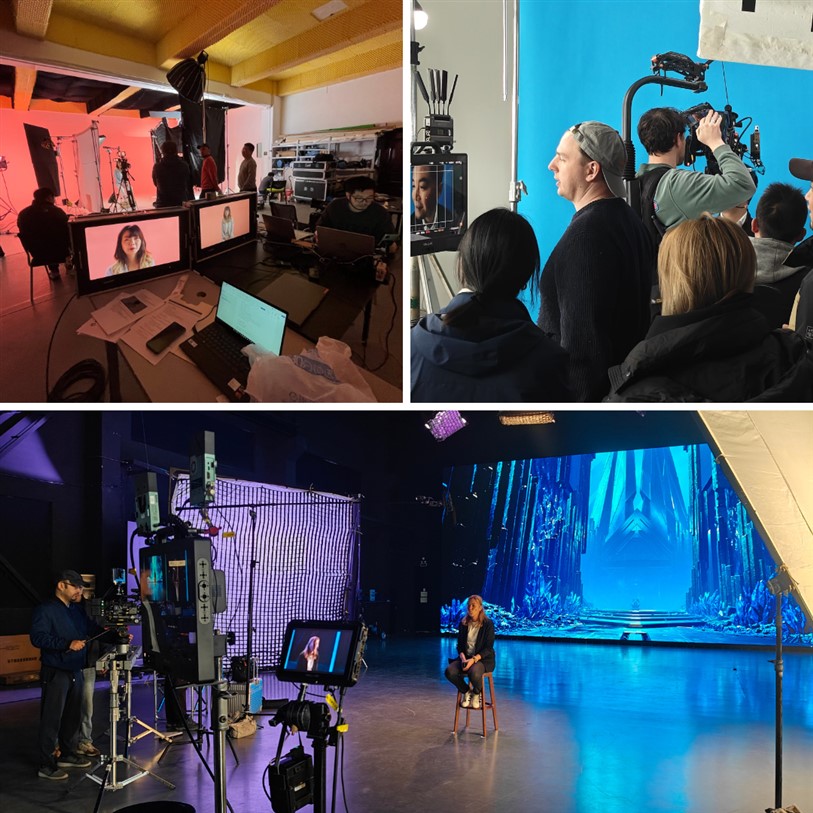
Overall, production resources in Shanghai are strong compared with many other cities in mainland China. Camera crews, directors, producers, bilingual fixers, cinematographers/DOPs, photographers, makeup and hair artists, sound recordists, assistant directors, location managers, gaffers, grips, prop specialists, production assistants, casting support, and even animal or pet trainers can usually be found in the city.
Shanghai is also one of the best cities in mainland China for bilingual production support. English is not as widely used as in Hong Kong or Singapore, but within mainland China, Shanghai is among the more international cities. English communication is more common in hotels, agencies, business districts, production circles, and among younger professionals. However, for filming, it is still highly recommended to work with a bilingual producer, fixer, or production coordinator who can manage communication with locations, vendors, drivers, restaurants, government offices, and local contributors.
Typical work hours for film crews in Shanghai are usually based on a 10-hour day, excluding meal breaks. Overtime, early call times, night shoots, travel days, and standby days should be discussed clearly before production. Film crew and production insurance coverage can also be arranged upon request.
What Productions Work Well in Shanghai?
Shanghai is suitable for many types of production, especially:
- Corporate videos and CEO interviews
- Commercials and branded content
- Documentary shoots
- Fashion, beauty, and lifestyle shoots
- Product videos and photography
- Event and conference filming
- Finance, technology, healthcare, architecture, and automotive content
- Factory and industrial filming in the wider Yangtze River Delta region
- Multi-city productions starting from Shanghai
Compared with Beijing, Shanghai is often more convenient for commercial, corporate, finance, fashion, design, lifestyle, and international business-related productions. Compared with many other mainland cities, Shanghai offers stronger access to bilingual production teams, premium hotels, international clients, rental houses, studios, catering, and post-production resources.
Visas
When coming to Shanghai for filming or production, it is usually better to consider a business or work-related visa, depending on the nature of the project and the role of the visiting crew. A tourist visa may be acceptable for very light visits or non-working travel, but it is not ideal if you are technically working on a production in China.
Visa rules and border requirements may change, so overseas crews should check with the relevant embassy, visa agent, or local production partner before travelling. For larger shoots involving foreign crew, equipment, client teams, or commercial filming, planning the visa situation early is always safer.
Carnet / ATA Carnet
Bringing cameras, lenses, and production equipment into Shanghai from overseas is possible with an ATA Carnet, but customs procedures should always be checked before arrival. Even with a Carnet, there can still be questions or delays at customs, especially if the equipment list is large, unclear, or does not match the actual items being brought in.
For many small and medium productions, renting equipment locally in Shanghai may be easier than flying in a full camera and lighting package. Local rental houses can usually provide cinema cameras, lenses, lighting, grip, monitors, wireless video, gimbals, basic sound kits, and production accessories.
If your production requires very specific or specialist equipment, it is still best to check availability in advance and reserve early.
Equipment Rental Houses
Shanghai has many equipment rental options, from smaller camera kits to high-end cinema packages. ARRI, RED, Sony, Canon, Blackmagic, Angenieux, Cooke, ARRI, Zeiss, and other professional camera and lens options are commonly available through different rental houses.
Grip and lighting equipment are also available, including LED panels, HMI lights, tube lights, softboxes, stands, flags, diffusion, dollies, sliders, gimbals, and basic studio support. For larger commercial productions, it is important to confirm the exact equipment list, backup options, delivery schedule, crew support, and insurance requirements in advance.
For smaller productions, renting locally can save time and reduce customs pressure. For larger or more technical productions, a local producer or production manager can compare rental options and check whether it is more practical to rent in Shanghai or bring certain equipment from overseas.
Local Purchasing and Fast Delivery
One practical advantage of filming in Shanghai is the speed of local logistics. Digital products, hard drives, cables, adapters, monitors, office supplies, small electronics, batteries, storage media, and basic production accessories can often be purchased and delivered quickly within the city.
Platforms such as JD.com are especially useful for last-minute production needs, and delivery in Shanghai is often very fast compared with many international cities. This can be helpful when a crew suddenly needs extra hard drives, card readers, HDMI cables, USB-C adapters, power strips, small monitors, backup phones, or office supplies.
However, specialist cinema equipment, large lighting packages, grip trucks, custom props, or branded production materials should still be reserved in advance.
Post-Production
Post-production resources in Shanghai are strong. Online and offline editing, color correction, sound post-production, motion graphics, subtitle work, translation, voiceover recording, and file delivery can be arranged locally.
For international productions, it is important to discuss workflow before the shoot. This includes camera format, proxy creation, backup strategy, file naming, hard drive handover, cloud upload, remote review, and delivery deadlines. If the client or agency needs daily rushes, proxy files, or remote approvals, this should be planned before production starts.
Because some international platforms may not work normally in mainland China, file-sharing methods should also be checked in advance.
Studios
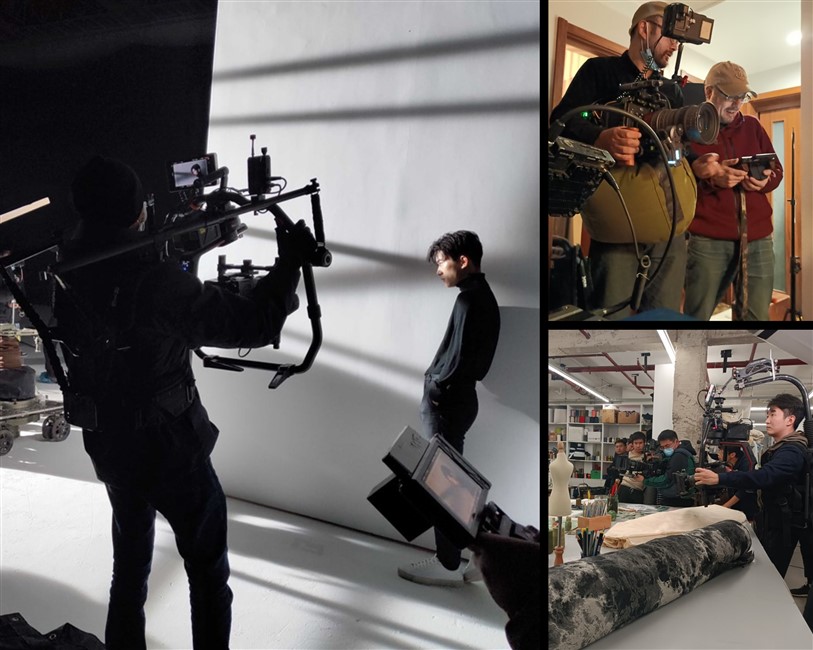
Shanghai has many photo and film studios available for use. These range from simple white cyclorama studios and interview spaces to larger commercial studios suitable for product shoots, fashion shoots, tabletop filming, livestreaming, car-related setups, and controlled lighting environments.
Studio filming can be a good option when the schedule is tight, the weather is uncertain, or the production needs full control over lighting, sound, power, makeup, wardrobe, and client viewing areas.
Studio costs vary depending on size, location, facilities, equipment, access hours, and whether additional services such as lighting, catering, makeup rooms, green rooms, or set building are required.
Location Conditions and Permit Requirements
To apply for location access in Shanghai, the first step is to understand whether the location is privately owned, commercially managed, residential, government-related, public-facing, or sensitive.
Privately owned locations are usually easier to arrange, especially if there is a clear location fee and the production impact is manageable. Hotels, restaurants, offices, studios, showrooms, warehouses, factories, and event venues can often be arranged with enough notice.
Public filming requires more planning. Shanghai is generally production-friendly, but it is not permit-free. Small documentary-style filming with a minimal crew may be manageable in some situations, while larger setups involving tripods, lighting, branded content, interviews, drones, crowd control, traffic impact, or commercial activity usually require permission or location coordination.
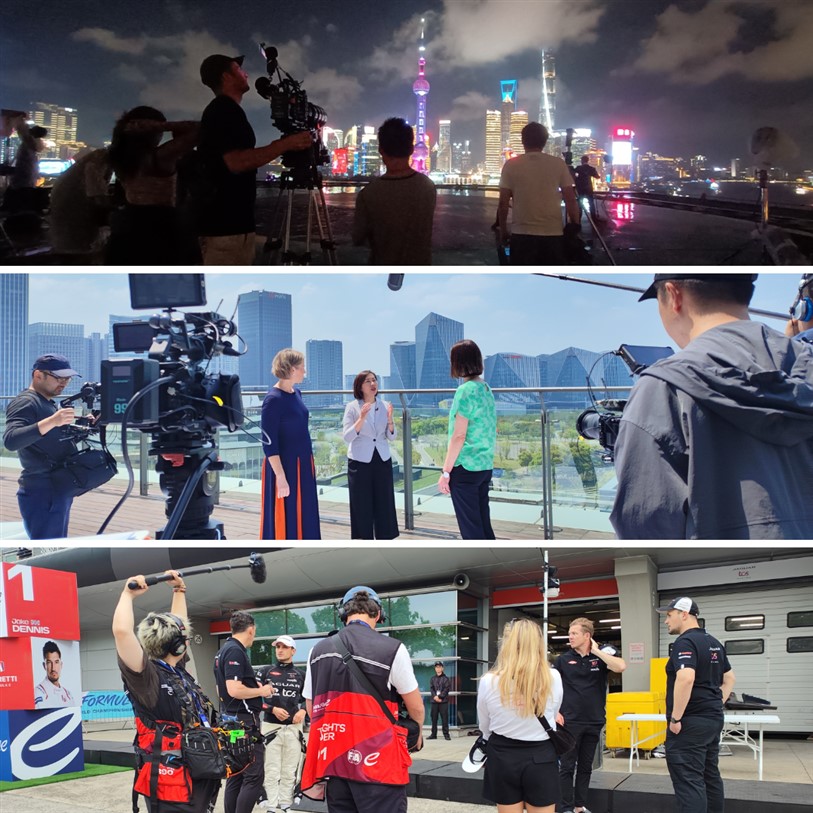
Filming in public areas without permission can cause problems, especially in high-profile locations such as The Bund, Lujiazui, major shopping streets, transport hubs, government-related buildings, and crowded tourist areas. For overseas productions, it is best to work with a local fixer or production team to assess each location properly.
Famous Locations in Shanghai
Some well-known Shanghai locations include The Bund, Yu Garden, Shanghai Tower, Lujiazui, Nanjing Road, Xintiandi, the Former French Concession, Jing’an, Xuhui, West Bund, North Bund, and various riverside areas along the Huangpu River.
For production planning, it is more useful to think of Shanghai by visual category:
The Bund and Lujiazui
Iconic skyline, riverside views, luxury city visuals, but more permit-sensitive and crowded.
Former French Concession
Tree-lined streets, heritage houses, cafes, boutiques, lifestyle scenes, fashion, and character-driven content.
Jing’an, Xuhui, and Huangpu
Corporate offices, retail streets, hotels, restaurants, modern city life, and business scenes.
Pudong and Zhangjiang
Technology, finance, business parks, R&D, modern architecture, and corporate environments.
West Bund and North Bund
Art, architecture, riverside spaces, contemporary urban visuals, and cultural locations.
Greater Shanghai and Yangtze River Delta
Factories, industrial parks, logistics centers, manufacturing stories, and regional corporate filming in Suzhou, Kunshan, Jiaxing, Hangzhou, Ningbo, Wuxi, and Nanjing.
Equipment Rental
Shanghai offers high-end camera equipment such as ARRI, RED, Sony, Canon, and other professional systems. Cinema lenses from Angenieux, Cooke, ARRI, Zeiss, and other brands are available through different suppliers.
Grip and lighting equipment are also readily available, but exact availability depends on the production dates and the scale of the shoot. During busy seasons, large events, fashion weeks, trade fairs, and commercial production periods, it is better to book equipment early.
For international crews, a local production team can help compare rental options, check the condition of equipment, arrange delivery and pickup, and make sure backup plans are in place.
Seasons, Weather, and Air Pollution
Shanghai has four distinct seasons. Spring and autumn are usually the most comfortable periods for filming, especially for outdoor work.
March to May is generally pleasant, with spring weather and better outdoor shooting conditions.
June and July can bring the plum rain season, with more rain, humidity, and possible schedule delays.
July and August are hot and humid, making outdoor filming more difficult, especially for long crew days, talent, makeup, and equipment.
September to November is often one of the best periods for outdoor filming in Shanghai.
December to February can be cold, damp, and grey, but indoor corporate videos, interviews, studio shoots, and office filming remain very manageable.
Air quality can vary, so it is wise to check the AQI before exterior shoots, drone shoots, skyline shots, or long-lens cityscape work. If the project requires clear skyline views, schedule flexibility is helpful.
Drone Usage
Drone filming in Shanghai is restricted, especially in the city center. Areas near airports, government buildings, military zones, dense urban districts, major public spaces, and sensitive areas can be difficult or impossible to fly in.
Certain drone operations may require licensed pilots, registration, flight approval, and height restrictions. Even when a drone is technically possible, approval, safety, weather, GPS signal, takeoff location, and crowd control all need to be considered.
For central Shanghai, drone filming should not be assumed. Alternatives may include high-floor shooting, rooftop access, licensed stock footage, jib or crane shots, gimbal movement, or filming in controlled private locations outside the most restricted zones.
Currency and Payment
In Shanghai, RMB is the local currency. USD, EUR, GBP, and other foreign currencies are not normally accepted for daily expenses.
Shanghai is largely cashless. Alipay and WeChat Pay are widely used for restaurants, taxis, delivery, shops, cafes, convenience stores, and many production-related purchases. International credit cards are accepted in some hotels, higher-end restaurants, and international venues, but they are not accepted everywhere.
Overseas crew members should prepare local payment options before arrival. A local producer or fixer can also help with payments to drivers, vendors, restaurants, locations, and local suppliers when needed.
Internet, Online Tools, and the Great Firewall
Like the rest of mainland China, Shanghai operates behind the Great Firewall. Google, Gmail, Google Drive, YouTube, Vimeo, WhatsApp, Instagram, Facebook, X, ChatGPT, and many other international platforms may not work normally without proper preparation.
This is especially important for international productions that rely on cloud storage, remote approvals, file sharing, live calls, AI tools, Google Docs, YouTube references, Vimeo links, or international messaging apps.
Before filming in Shanghai, overseas crews should prepare backup communication and file transfer methods. These may include WeChat, local SIM cards, hotel internet checks, local file transfer platforms, offline hard drive delivery, FTP options, or production-managed upload solutions.
If the shoot requires livestreaming, remote client monitoring, fast file delivery, or same-day rushes, network testing should be done in advance.
Hotel and Meal Costs
Shanghai has a wide range of hotels, from local business hotels to international five-star properties. Compared with cities such as Hong Kong, Singapore, London, or New York, hotel costs in Shanghai can still be relatively reasonable. However, prices can increase during trade fairs, major conferences, fashion events, public holidays, and peak travel periods.
A practical hotel range for many international productions may be around 100 USD to 200 USD per night, depending on location, brand, season, and booking time. Higher-end hotels, luxury properties, or last-minute bookings during busy periods can cost significantly more.
Food options in Shanghai are very diverse. Local Chinese food, international restaurants, vegetarian options, coffee service, Western-style meals, and higher-end dining are all available. Catering services are also widely available for productions, from simple crew meals and lunch boxes to more premium catering for commercial shoots, corporate interviews, client-facing productions, and events.
For production planning, it is useful to confirm dietary requirements, meal timing, coffee needs, water supply, and whether the location allows outside catering.
Filming in Shanghai Tips: What To Do With Transportation?
Shanghai has two major airports: Shanghai Pudong International Airport and Shanghai Hongqiao International Airport. Pudong is the main international airport, while Hongqiao is very convenient for domestic flights and high-speed rail connections.
Shanghai also has several major train stations, including Shanghai Railway Station, Shanghai South Railway Station, and Shanghai Hongqiao Railway Station. Hongqiao Railway Station is one of the most useful transport hubs for productions travelling to nearby cities such as Suzhou, Hangzhou, Nanjing, Wuxi, Jiaxing, Kunshan, and Ningbo.
For production, it is common to hire vans, cars, or lorries depending on the amount of equipment. A 5-seat car or van with a driver may cost around 150 USD to 200 USD per day, depending on the schedule, distance, vehicle type, overtime, and production needs. Larger vans, trucks, or vehicles for equipment transport should be arranged according to the shoot requirements.
For smaller productions, Didi is very convenient and taxis in Shanghai are generally more affordable than in many major international cities. However, when carrying camera, lighting, sound, or grip equipment, production vehicles with drivers are still recommended.
Traffic can be heavy during rush hours, rainy days, events, and public holidays. Loading and parking can also be difficult in areas such as The Bund, Lujiazui, the Former French Concession, Jing’an, and busy commercial streets. These details should be checked during location planning.
Shanghai as a Base for Multi-City Filming
Shanghai is one of the best starting points for multi-city filming in China. The city has strong international flight access, two major airports, and one of the most developed high-speed rail networks in the country.
For shoots involving factories, industrial parks, corporate offices, logistics facilities, interviews, or manufacturing stories, Shanghai can work well as the first stop before moving to nearby cities in the Yangtze River Delta region.
From Shanghai, crews can easily travel to Suzhou, Kunshan, Jiaxing, Hangzhou, Ningbo, Wuxi, Nanjing, and other regional production destinations. This makes Shanghai a practical base for productions that need both urban visuals and access to industrial or corporate locations nearby.
Public Holidays and Busy Periods
Like other Chinese cities, Shanghai becomes very busy during national holidays. Chinese New Year, Labour Day, National Day, and major long weekends can affect hotel prices, traffic, location availability, crew schedules, equipment rental, restaurants, and travel.
Whenever possible, it is better to avoid filming during major public holidays. If filming during these periods is unavoidable, extra preparation time and early booking are recommended.
Trade fairs, major conferences, fashion events, auto shows, and large exhibitions can also increase hotel rates and reduce availability, especially in central business districts and near convention areas.
Practical Production Tips Before Filming in Shanghai
Before filming in Shanghai, it is useful to prepare the following:
- Confirm whether your filming locations are public, private, commercial, or sensitive
- Check whether permits or written location approval are needed
- Decide whether to rent equipment locally or bring your own equipment
- Check Carnet requirements if bringing gear from overseas
- Reserve crew, equipment, vehicles, studios, and hotels early
- Prepare Alipay, WeChat Pay, or local payment support
- Test internet access, file-sharing tools, and communication platforms
- Avoid major public holidays where possible
- Build weather backup plans for outdoor shoots
- Confirm catering, dietary requirements, and meal timing
- Arrange bilingual production support for communication and logistics
Shanghai is highly convenient for international productions, but it still requires local planning. Fast delivery, strong equipment rental, diverse catering, affordable transport, good hotels, and access to nearby cities make it one of the most efficient production bases in mainland China. At the same time, overseas crews should prepare for local payment systems, internet restrictions, public holiday congestion, location approvals, and language differences.
Why Work With a Local Shanghai Production Team?
A local Shanghai production team can help with location scouting, permits, crew booking, equipment rental, casting, transport, hotel coordination, catering, translation, file delivery, and on-site production management.
For international producers, working with a bilingual local team reduces risk and saves time. It also helps avoid common problems around communication, location access, payments, internet tools, customs, transport, and last-minute production needs.
Whether you are planning a corporate video, commercial, documentary, interview shoot, event film, or multi-city production in China, Shanghai is one of the most practical places to start.
We hope this guide to filming in Shanghai is helpful. If you need camera crew, fixer services, equipment rental, location support, or full production support in Shanghai, feel free to contact Shoot In China for more advice.