



Historic Towns and Villages for Filming in China
Historic towns and villages in China range from canal-side settlements in the east to timber houses in mountain valleys. The five places below have distinct rooflines, water settings and surrounding landscapes. This guide introduces how they look, how to reach them and what changes with the season.
Explore the 16-location landscape overview for more scenery across China.
1. Hongcun, Anhui
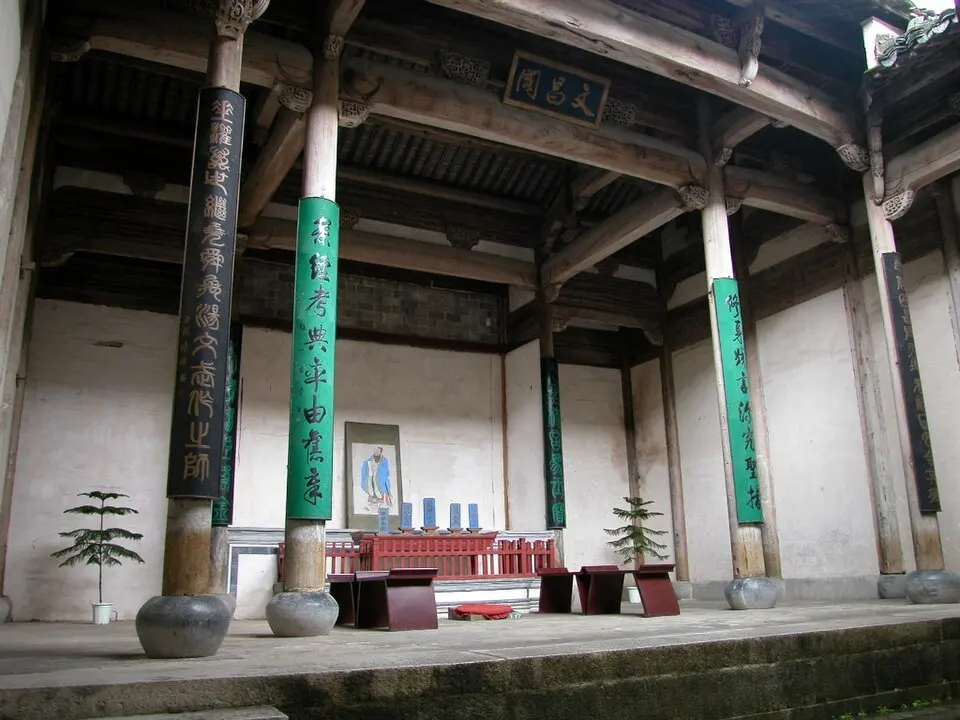
Hongcun brings together white-walled houses, dark rooflines, narrow lanes and still water. The pond reflections make the village immediately recognisable, but the smaller water channels and side streets give it a more intimate scale.
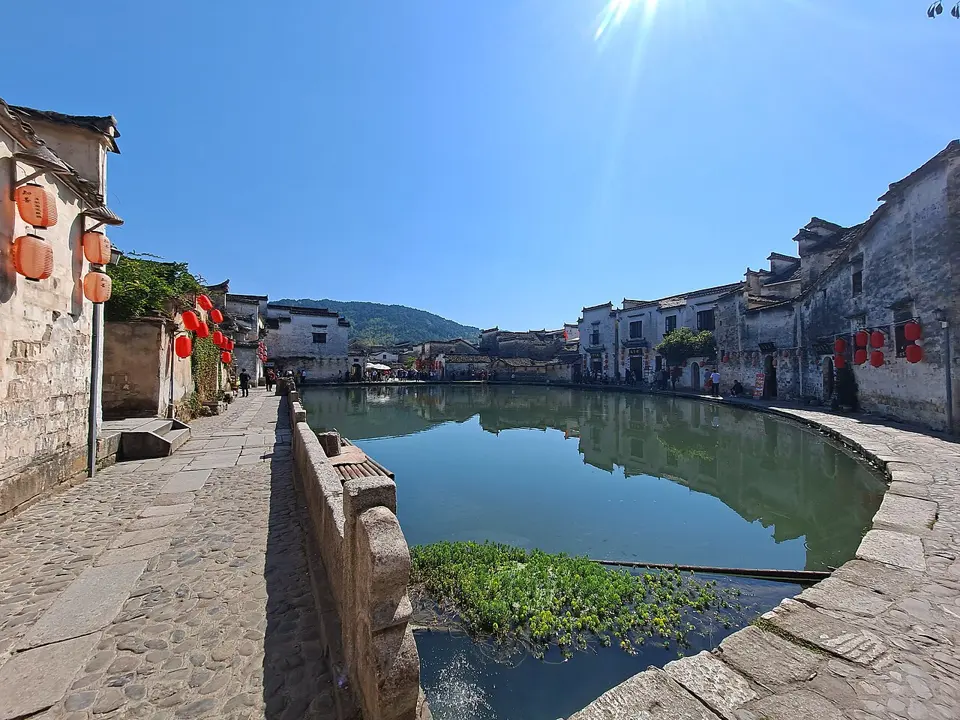

The village is surrounded by countryside and low hills. A wider view shows the relationship between water and settlement; within the lanes, weathered surfaces, doorways and roof edges become the main features.
Getting There. Rail gateways include Huangshan North and Yixian East. Continue by the currently operating scenic transport or an arranged car to Hongcun. Huangshan transport authorities publish connections; check the selected station carefully.
Parking. Use the village visitor parking and continue on foot. Historic lanes are not a vehicle route. Confirm the walk from the selected entrance to the accommodation, especially with luggage.
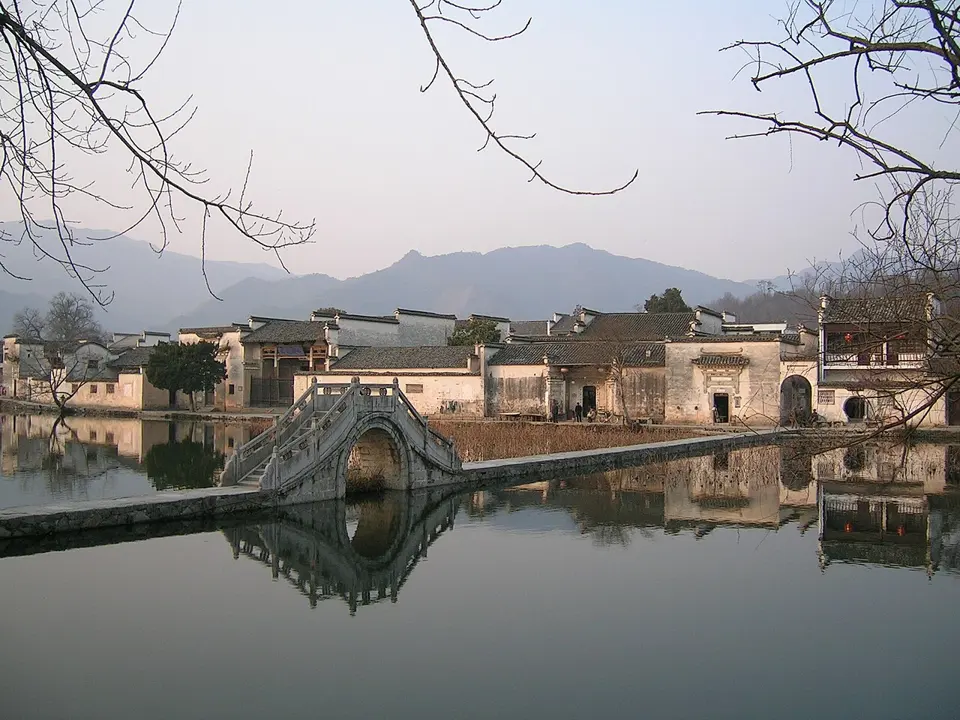

Season. Spring brings fresh foliage and surrounding field colour; autumn gives clearer contrasts and seasonal colour in the wider countryside. Both are useful starting points. Rain creates reflections on paving but can obscure the hills.
Food and Dining. Village restaurants and guesthouses provide meal options, with more services in the surrounding towns. Ask about early breakfast if you want to see the pond before the main daytime crowds.

Location References
2. Wuzhen, Zhejiang
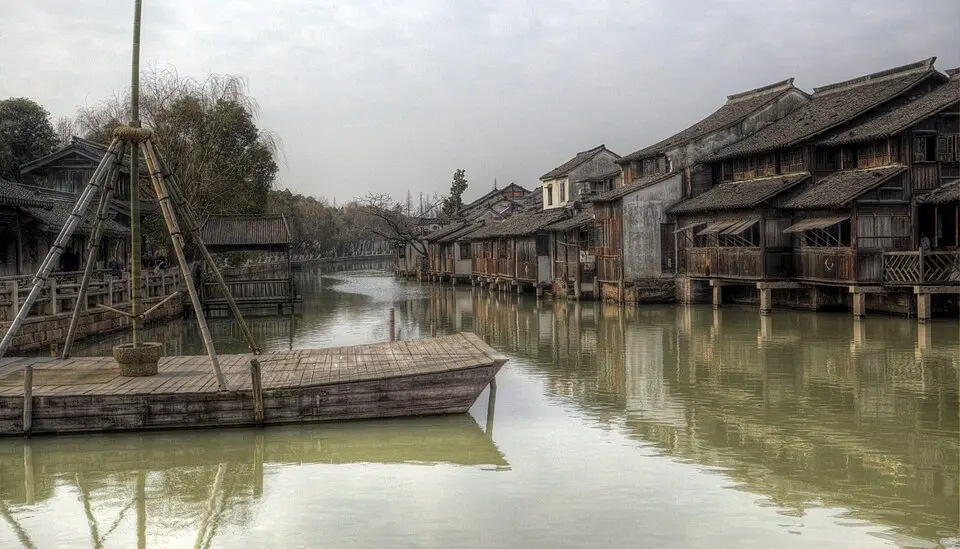
Wuzhen is a water-town landscape of canals, stone bridges and timber-fronted houses. Roofs and waterside walls form long horizontal lines, interrupted by the curves of bridges and reflections beneath them.
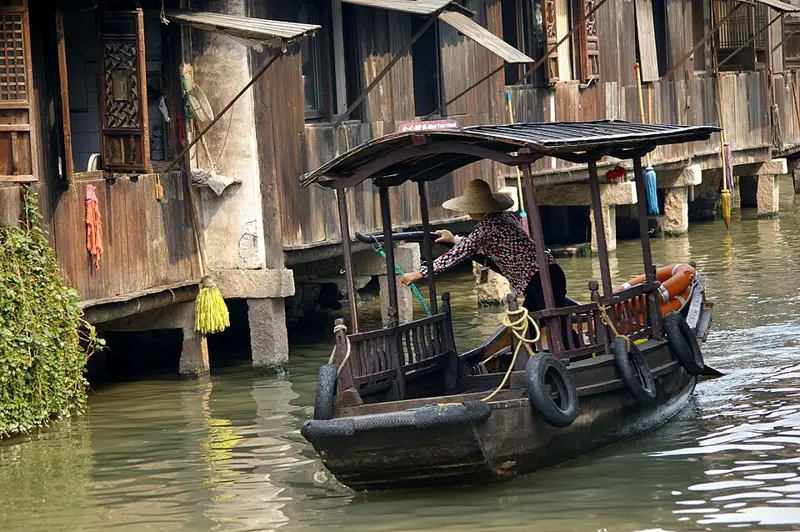

The East and West scenic areas are distinct places rather than interchangeable entrances. Daylight shows the textures of wood, stone and plaster; the illuminated evening scene has a different colour and atmosphere.
Getting There. Tongxiang railway station is a useful rail gateway, followed by a road transfer to the chosen scenic area. State East or West explicitly when arranging transport and accommodation.
Parking. The scenic destination has managed visitor parking. Choose the correct lot for the entrance and follow the current walking or internal transport route. Parking outside does not provide vehicle access along the canals.
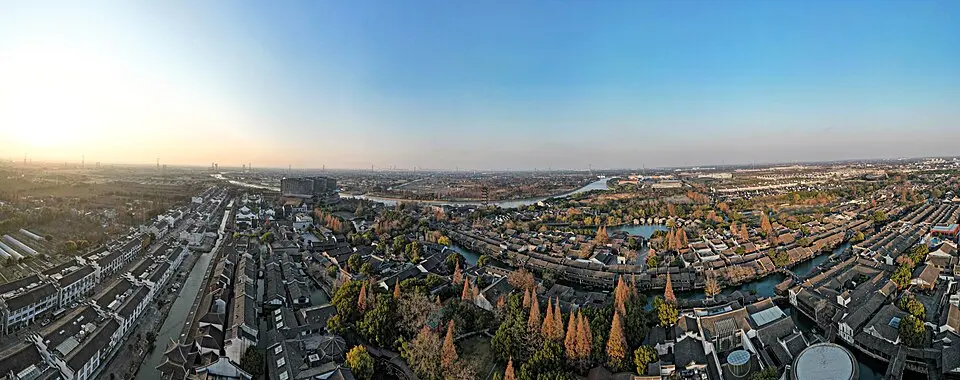

Season. Spring and autumn are comfortable starting points for walking and seeing the canals in softer light. Winter can give a quieter, more restrained palette. Summer greenery is fuller, with greater heat and possible rain.
Food and Dining. The developed town and scenic areas have restaurants, teahouses and accommodation. Check breakfast and evening meal hours with the chosen property, particularly when staying inside a managed scenic area.

Location References
3. Nanxun, Zhejiang
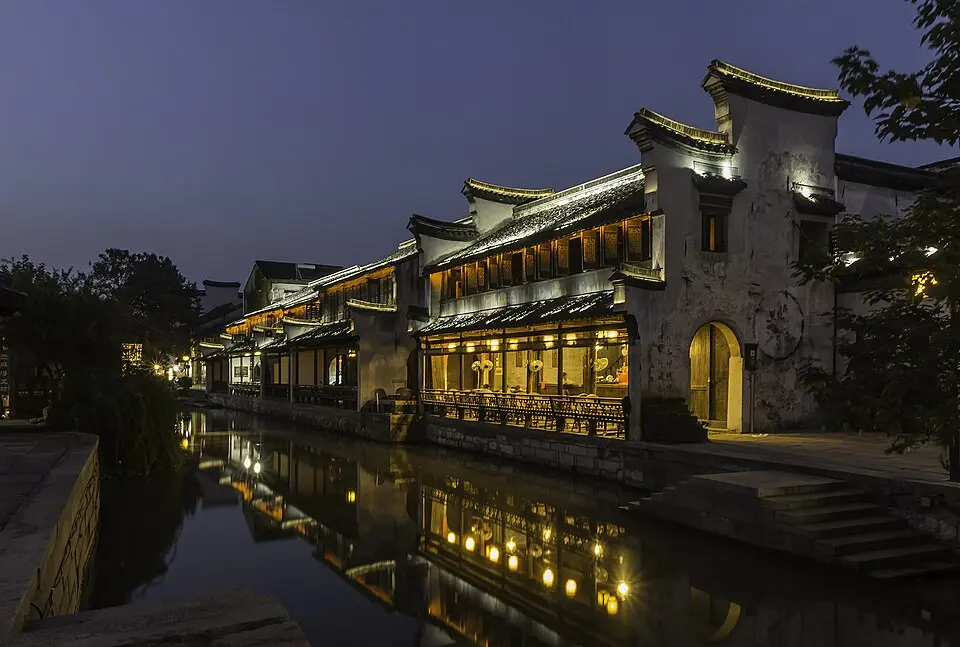
Nanxun combines canals and stone bridges with waterside houses, gardens and former merchant residences. Its visual character comes from the contrast between modest canal-front buildings and more elaborate historic properties.
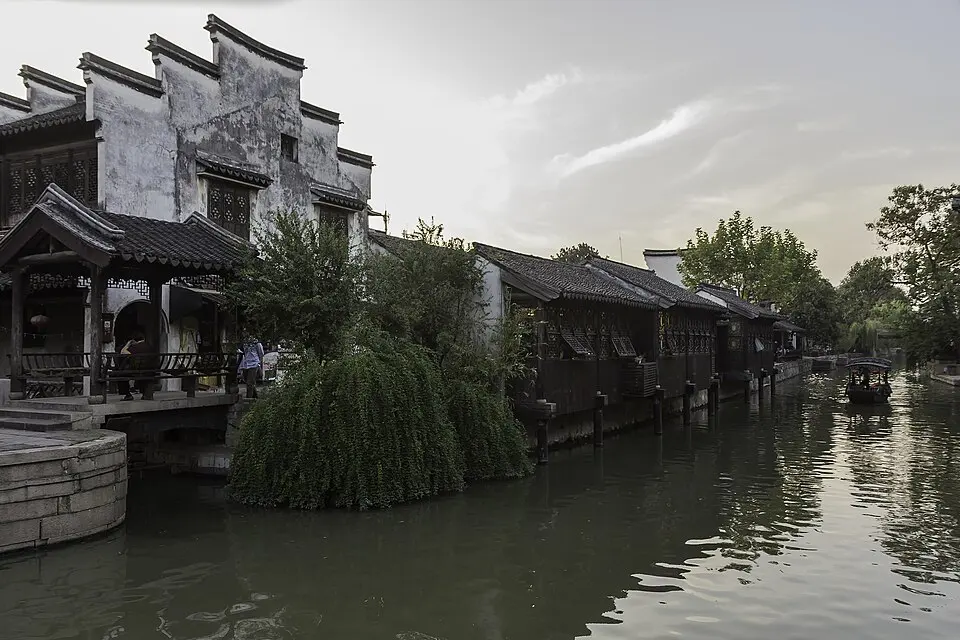

The Baijianlou waterfront is associated with repeating house fronts and a long canal perspective. Other parts of the town reveal courtyards and architectural details, so walking between areas provides more variety than staying at one bridge.
Getting There. Check trains to Huzhou Nanxun station, then continue by road to the ancient town entrance. The station and historic waterfront are separate destinations; confirm the final transfer and return pickup.
Parking. Use signed visitor parking around the historic area and explore the canals on foot. Select a pickup point outside the narrow lanes. Current parking availability and entrance arrangements should be checked locally.


Season. Spring and autumn are useful starting seasons for mild conditions and waterside walks. Overcast light can suit the pale walls and dark roofs. Summer adds greenery but also heat, rain and stronger daytime contrast.
Food and Dining. The town has restaurants and cafes around the visitor streets. A meal near the entrance can be simpler than returning from a distant canal section; check opening times before an early or late visit.

4. Fenghuang, Hunan
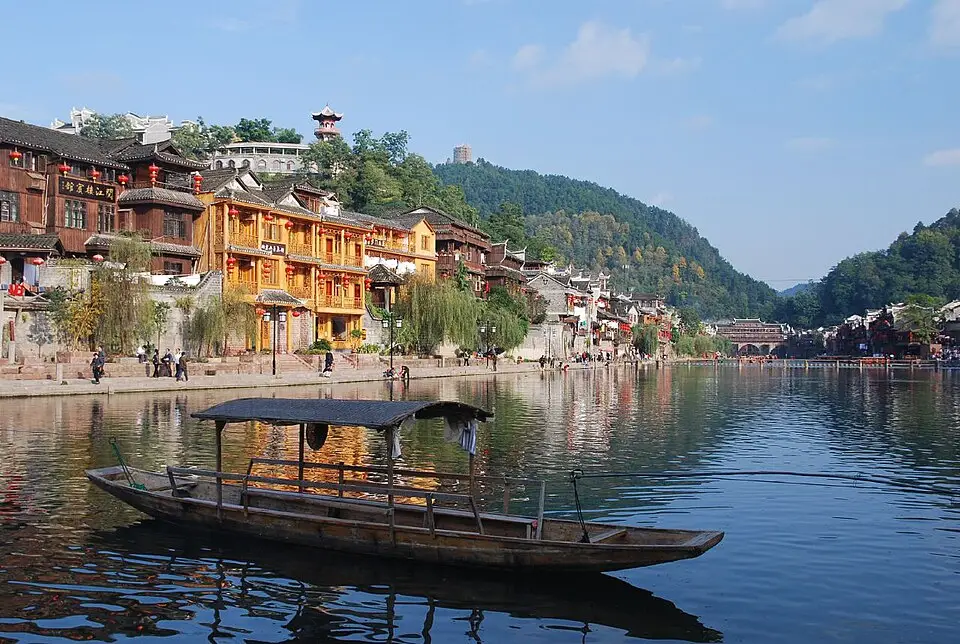
Fenghuang follows the Tuojiang River through a setting of timber houses, bridges and hillside buildings. The river gives the town a continuous foreground, while the layered waterfront changes as you move between the banks.
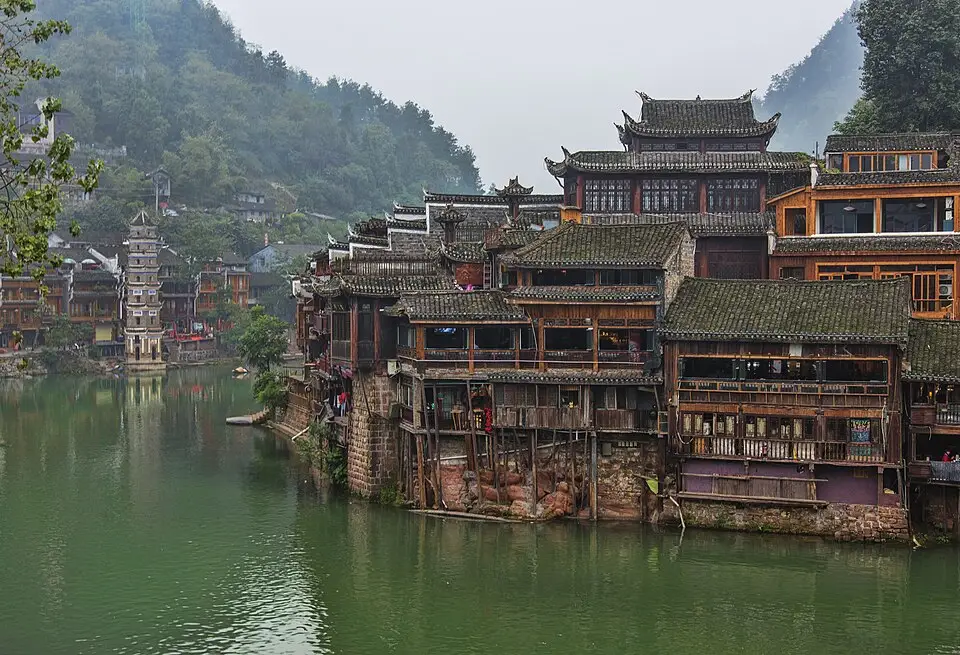

Daylight reveals the timber structures and pale stone; evening lighting turns the riverfront into a much brighter scene. These are different versions of the town, and neither should be expected to resemble an empty historic set.
Getting There. Travel by rail to Fenghuanggucheng station and arrange the onward connection to the ancient town. Choose the entrance nearest the accommodation, since the riverfront itself is explored on foot.
Parking. Plan for parking or drop-off outside the historic lanes. Ask the accommodation for the nearest practical meeting point and the amount of walking or steps involved. Do not assume a river-view room has vehicle access.
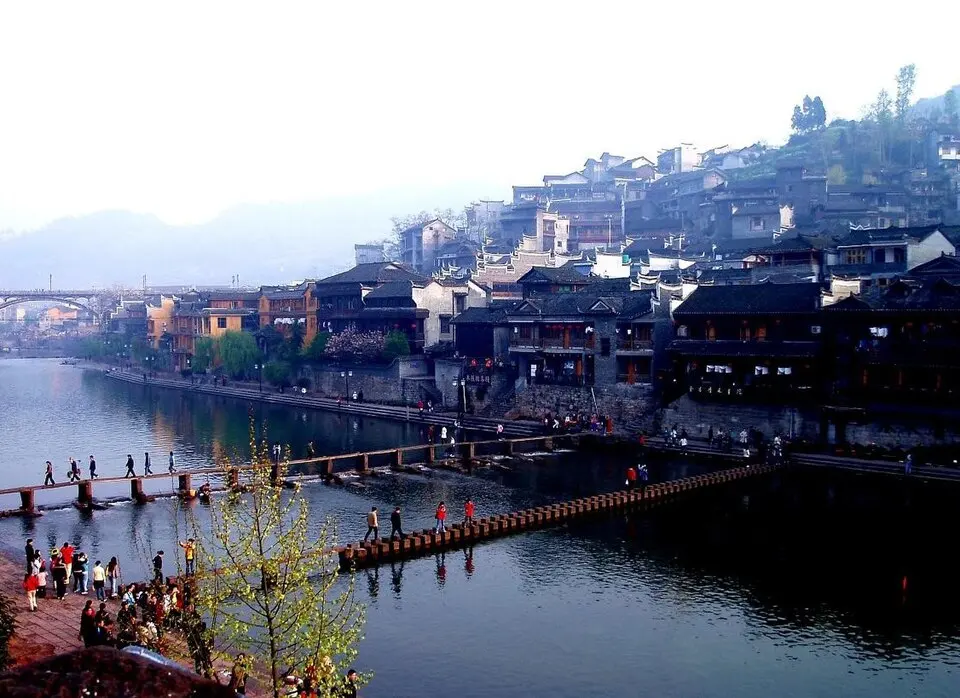

Season. Spring and autumn are reasonable starting points for milder walks and changing light along the river. Rain can alter river colour and access to low waterside paths. Check local weather and river conditions before arrival.
Food and Dining. The developed town has many meal options. Check spice preferences and opening hours with the restaurant, and arrange breakfast in advance if departing before the normal visitor day.

5. Hemu Village, Xinjiang
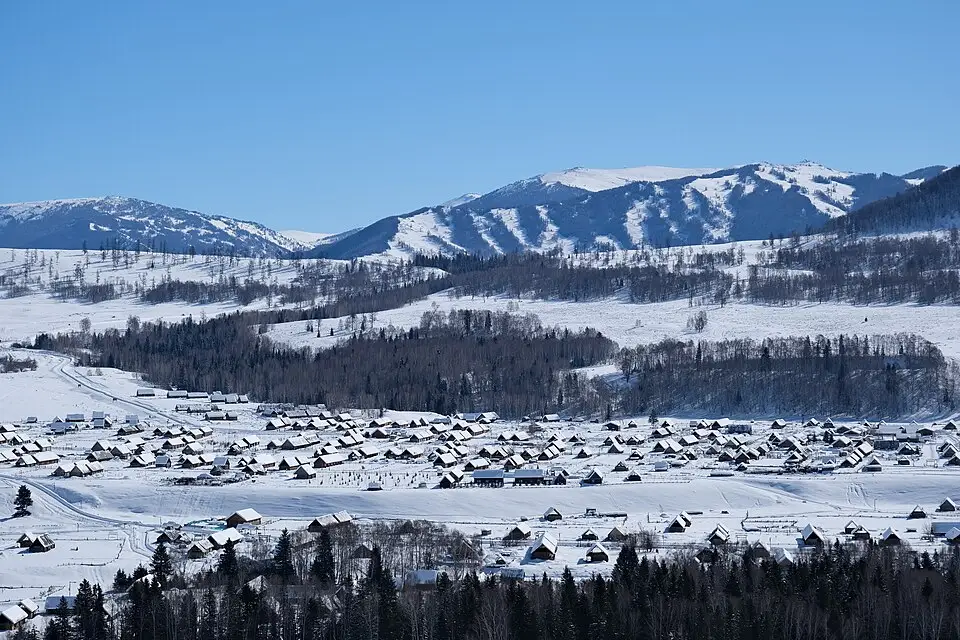
Log houses sit in a broad valley beneath wooded slopes at Hemu. The river, open spaces between the buildings and the surrounding mountain lines give the village a different character from the tiled-roof towns of eastern and southern China.
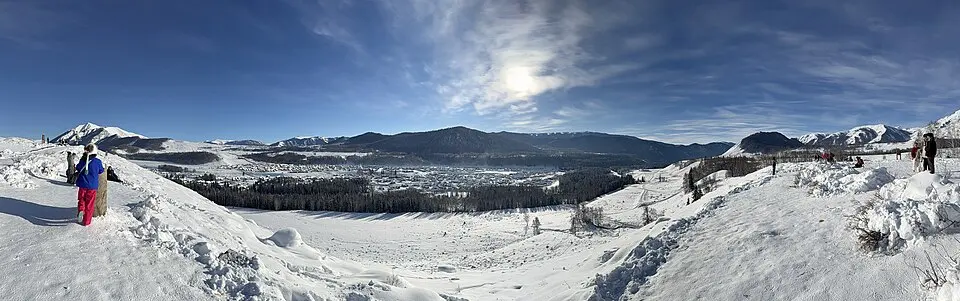

A higher viewpoint reveals the settlement as a whole, while river paths show the timber walls and forest edge more closely. The photographs can look particularly different between green summer, golden autumn and deep winter snow.
Getting There. Approach through the Altay and Burqin region, with the final mountain-road connection arranged for the season. Check which airport services and road routes operate on the intended dates.
Parking. Entry and internal transport arrangements change by season. Confirm where private vehicles must stop and whether a shuttle is required; arrange luggage transfer rather than assuming a car can reach the chosen house.
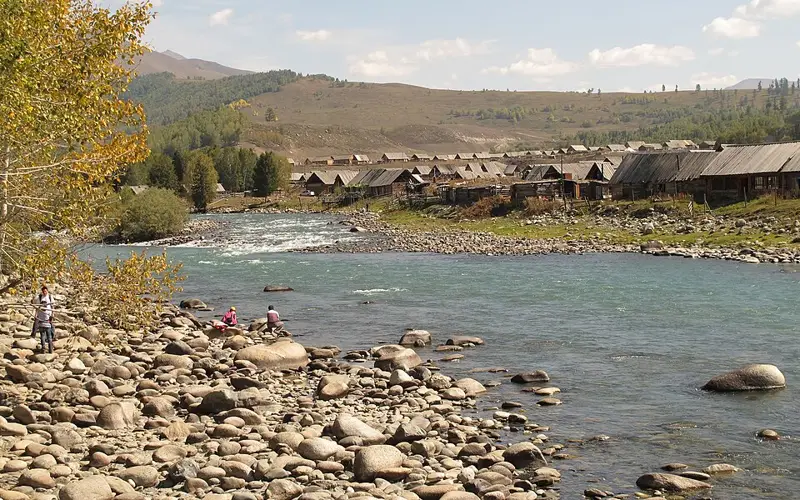

Season. September is a starting point for autumn foliage, but the colour window moves with weather and elevation. Summer is greener; winter can be deeply snowy and requires a different transport plan. Mist is possible, not guaranteed.
Food and Dining. Arrange meals with the booked guesthouse or a confirmed village restaurant. Establish breakfast and dinner hours before arrival, especially outside the busy season or during a very early start.

Location References
More Location Guides
- Grassland Filming Locations in China
- Desert and Rock Filming Locations in China
- Coastal and Island Filming Locations in China
- Best Lake Filming Locations in China
- Best Mountain Locations in China for Filming and Photography
- River and Waterfall Filming Locations in China
- Rice Terraces and Rural Filming Locations in China
- Gardens and Heritage Architecture for Filming in China
- Wetland and Mudflat Filming Locations in China
- Forest and Bamboo Filming Locations in China
- Snow and Winter Filming Locations in China
- Karst and Canyon Filming Locations in China
- Traditional Village Filming Locations in China
These credited photographs are location references, not examples of Shoot In China projects. Seasonal descriptions are general guides. Confirm current opening, access and transport arrangements for the intended travel dates.