



Rice Terraces and Rural Filming Locations in China
Water-filled terraces, yellow flower fields and red-earth hills give the Chinese countryside very different appearances. This selection of rural filming locations in China introduces five areas through their scenery, the way the landscape changes with the season, and the practical journey to each place.
Explore the 16-location landscape overview for more scenery across China.
1. Yuanyang Rice Terraces, Yunnan
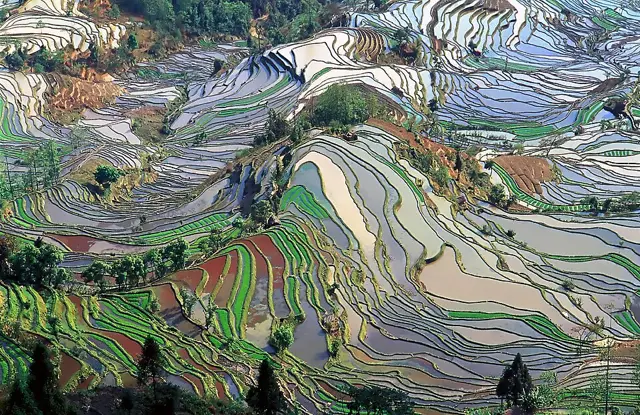
Water-filled terraces curve around the slopes of the Ailao Mountains, with villages above the fields and wooded ridges behind them. From a high viewpoint, narrow banks divide the hillside into hundreds of small reflections. The colour can move from cool silver to warm pink as the sky changes.
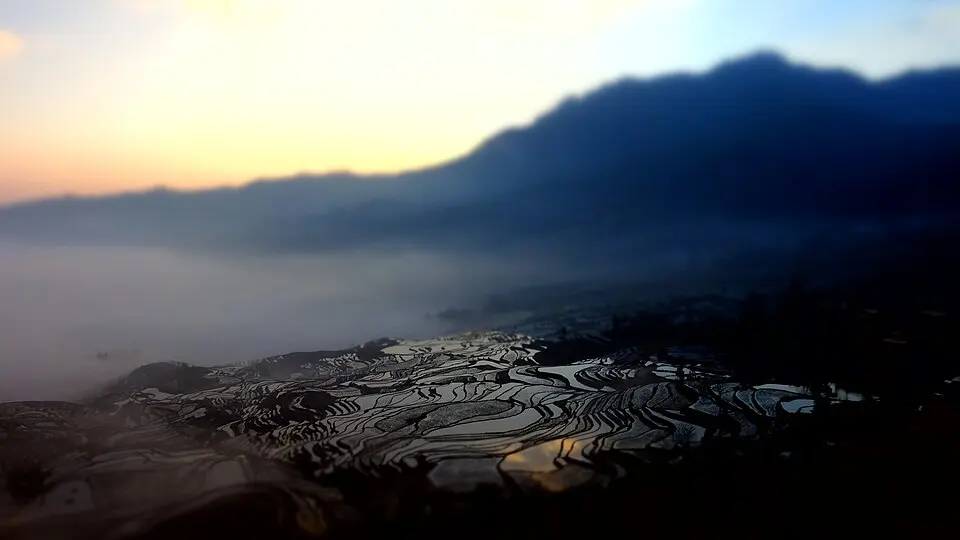

Duoyishu and Bada offer different outlooks within the wider Honghe Hani terrace landscape. Mist can reveal one hillside while hiding another, so a photograph from a clear morning and one taken in low cloud may show quite different versions of the same place.
Getting There. Use Kunming as the main arrival hub, then arrange a road transfer to the terrace area around Xinjie. The viewpoints are spread across mountain roads; choose accommodation near the first view you want to see rather than treating the entire area as one walkable park.
Parking. Plan to use the designated visitor or viewpoint parking and continue on foot. Exact parking availability and any local shuttle arrangements need checking for the travel dates. Narrow bends and holiday traffic make roadside stopping a poor substitute.
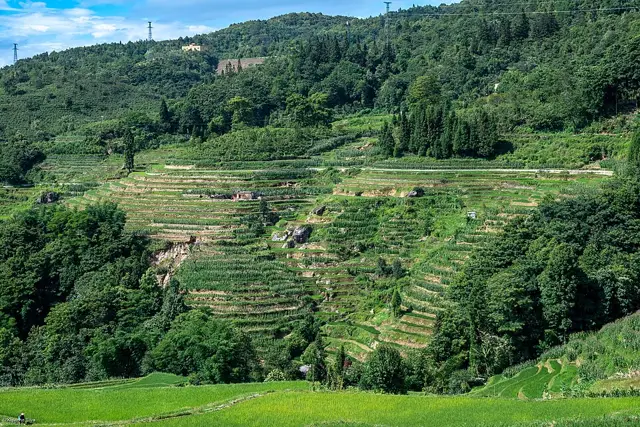

Season. November to April is the usual starting window for reflective, irrigated terraces. Green rice gives the slopes a softer texture later in the growing cycle. Water levels, planting and cloud cover vary by field and year.
Food and Dining. Xinjie and the village guesthouses are practical places to arrange meals. Confirm breakfast before a dawn departure and dinner before returning late; do not assume a remote viewing platform has food available.

2. Wuyuan Countryside, Jiangxi
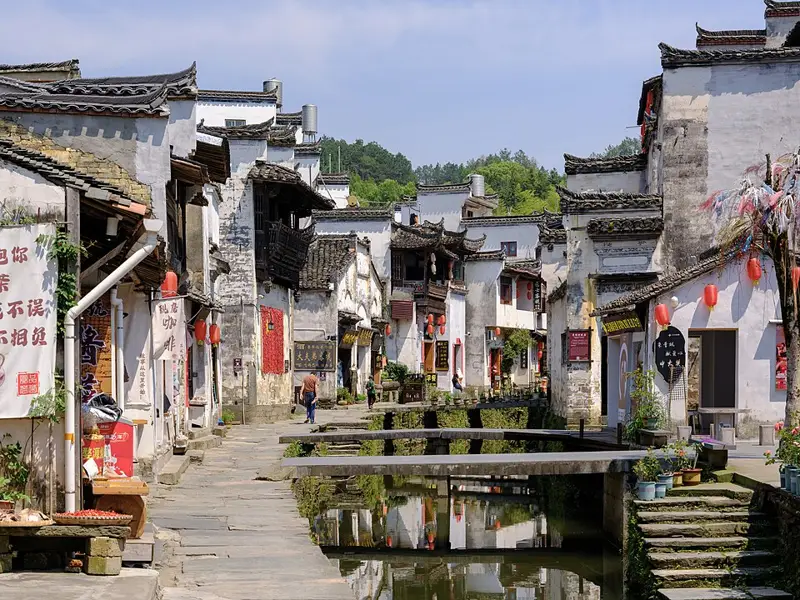
White walls, dark tiled roofs and fields of yellow flowers sit between low hills in Wuyuan. The landscape is a patchwork rather than a single continuous flower field: villages, tree lines, streams and terraces divide the view into smaller scenes.
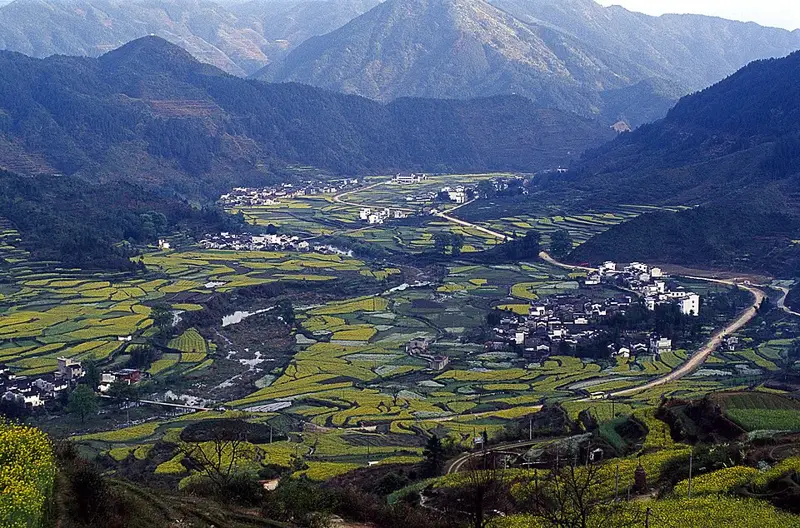

The higher terraces around Huangling and the wider countryside have different shapes and flowering dates. Broad views show how the settlements fit into the hills, while a closer view brings out the contrast between pale plaster, black roof tiles and spring colour.
Getting There. Travel by rail to Wuyuan, then continue by road to the selected village or viewpoint. Decide on the exact destination before arranging the final transfer; a county-wide place name is not a useful drop-off address.
Parking. Use the selected attraction or village visitor parking. Huangling access can involve a separate visitor route and cable car; check the current entrance arrangements. Space near village lanes may be limited during the flower season.
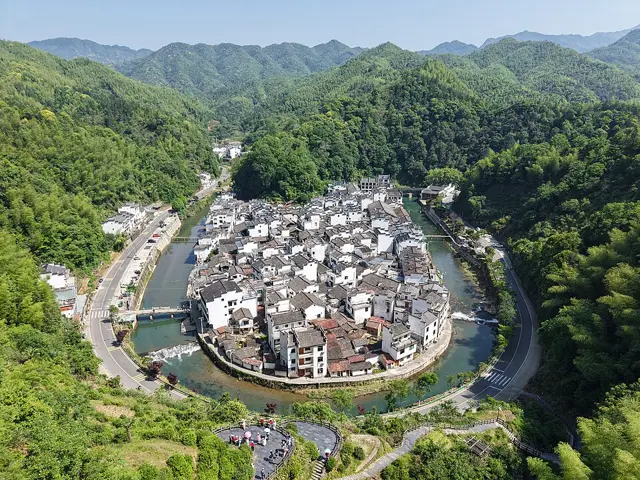

Season. March is a useful starting point for the yellow rapeseed landscape, with higher terraces sometimes flowering later into spring. Autumn offers a different palette in some villages. Match the visit to the particular village and current flowering report.
Food and Dining. Wuyuan town has the broadest choice of meals and supplies. Village restaurants and guesthouses offer closer alternatives; confirm opening times if arriving early or staying after sunset.

3. Luoping Flower Fields, Yunnan
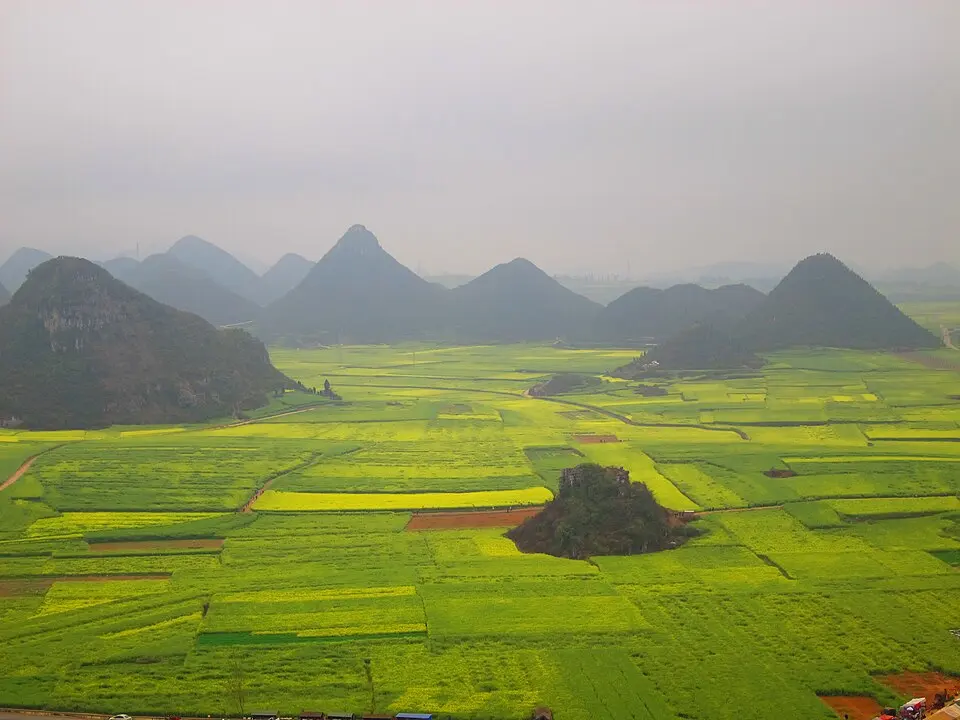
At Luoping, rounded limestone hills rise above a broad plain of cultivated fields. During the rapeseed season, yellow flowers fill the spaces between the hills, making the dark peaks look like islands in a bright landscape.
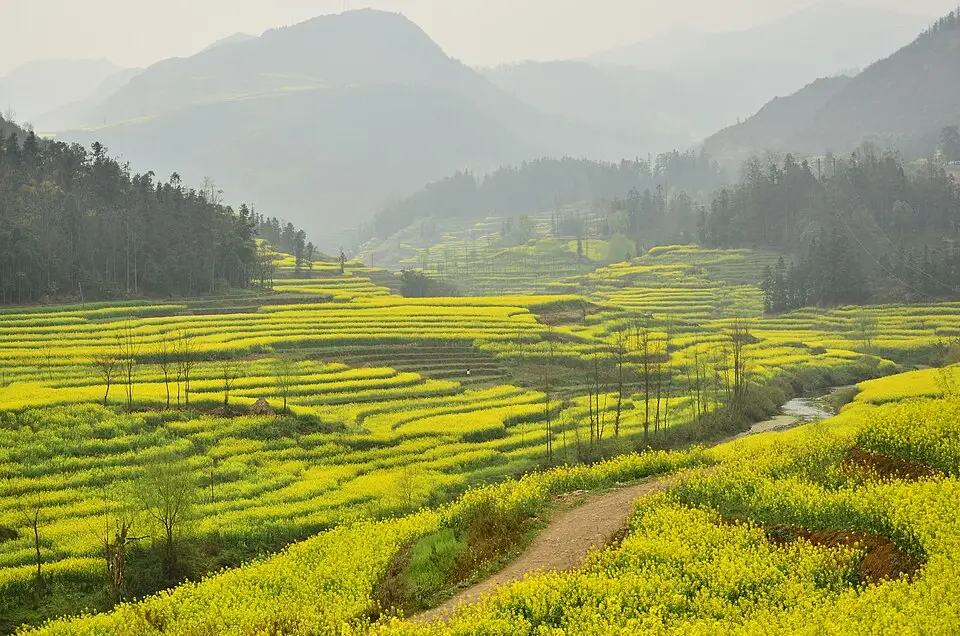

Jinji Peak Cluster provides a recognisable combination of flower fields and karst outlines. Lower paths bring the flowers into the foreground; raised viewpoints make the repeating hills and field boundaries easier to read.
Getting There. Arrive through Kunming or another regional connection and continue to Luoping. Arrange the last road transfer to the chosen flower-field area; Jinji is outside the county centre.
Parking. Check the visitor parking serving the exact viewpoint before departure. Expect a walk from the vehicle to the viewing position and heavier traffic when the flowers peak. Do not park in field entrances.
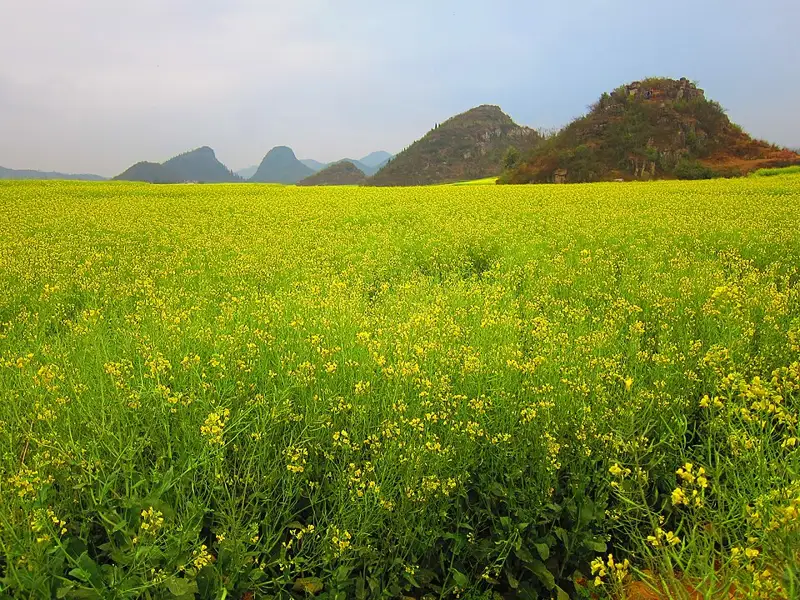

Season. February and March are the usual reference months for the yellow flower landscape. The peak changes with weather and planting. Outside the flowering period, the karst remains but the fields have a different colour and texture.
Food and Dining. Luoping county town is a practical meal and supply base. Small restaurants closer to the flower areas can be convenient, but confirm their hours rather than relying on a stall at the viewpoint.

4. Menyuan Flower Fields, Qinghai
Menyuan has a wider, more open character than the southern flower-field locations. Yellow fields spread across a highland basin, with villages, roads and the Qilian mountain landscape providing scale in the distance.
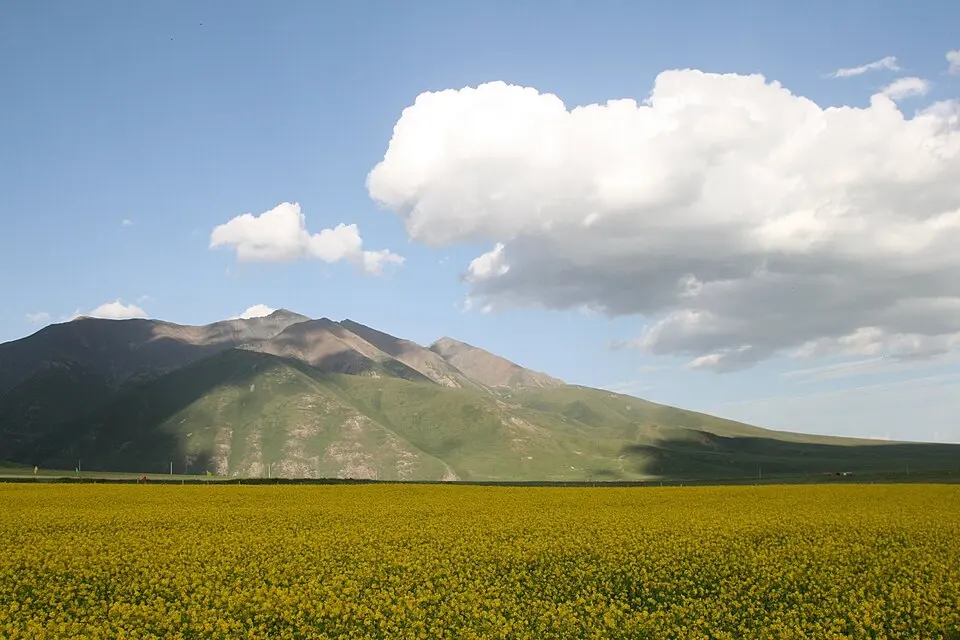

The appeal is the relationship between a broad foreground and the mountain horizon. A clear day brings stronger separation between the fields and ridges; passing cloud can break the plain into bands of light and shade.
Getting There. Use Xining as the main regional gateway and check current rail connections to Menyuan. Continue by local road to the selected flower-field viewpoint. Plan the return transfer before leaving the station.
Parking. Choose established visitor parking serving the viewpoint. Roadside fields are working land, and a wide view does not imply that the roadside is suitable for stopping. Confirm vehicle access and the remaining walk locally.
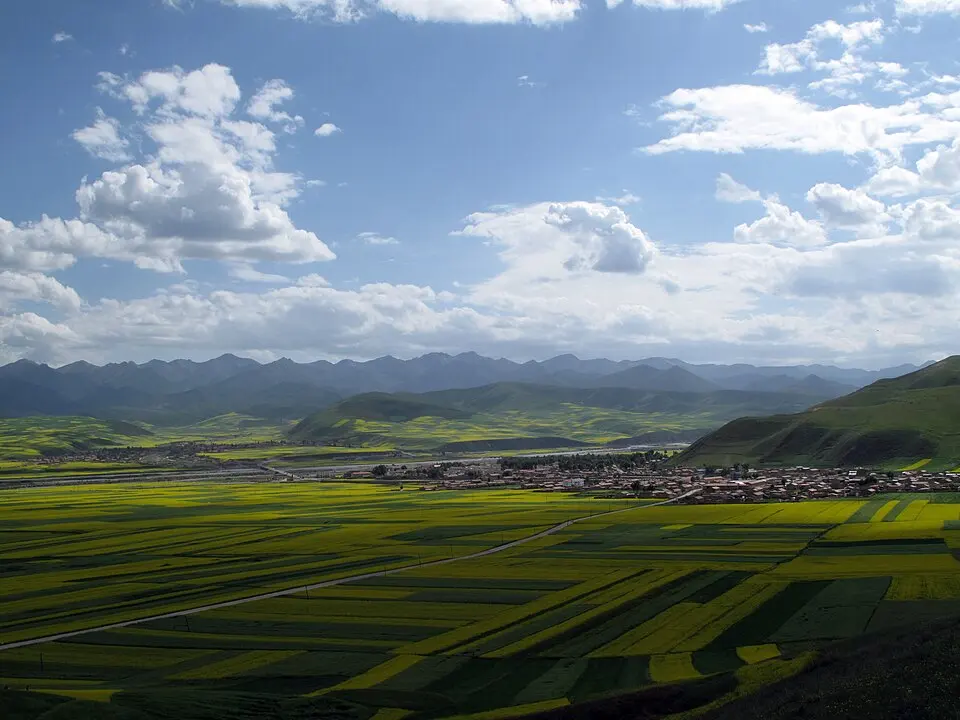

Season. July is the main seasonal reference for rapeseed flowers here, later than Luoping and Wuyuan. Weather services publish annual flowering forecasts; use the current forecast rather than treating one fixed week as guaranteed.
Food and Dining. Haomen town is a practical place to arrange meals, drinking water and other supplies. For an early start, ask the accommodation to confirm breakfast or prepare food in advance.

5. Dongchuan Red Land, Yunnan
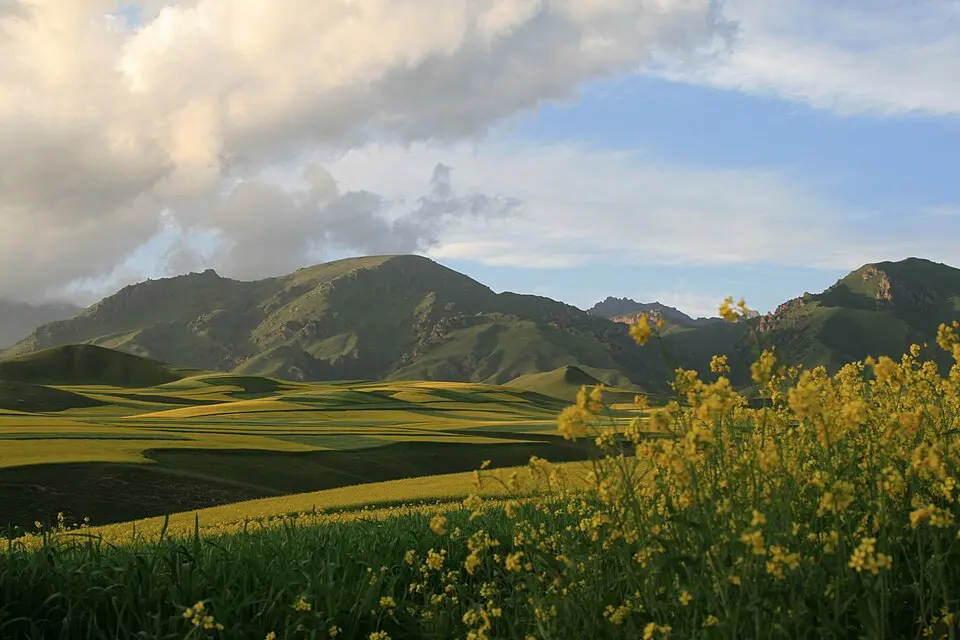
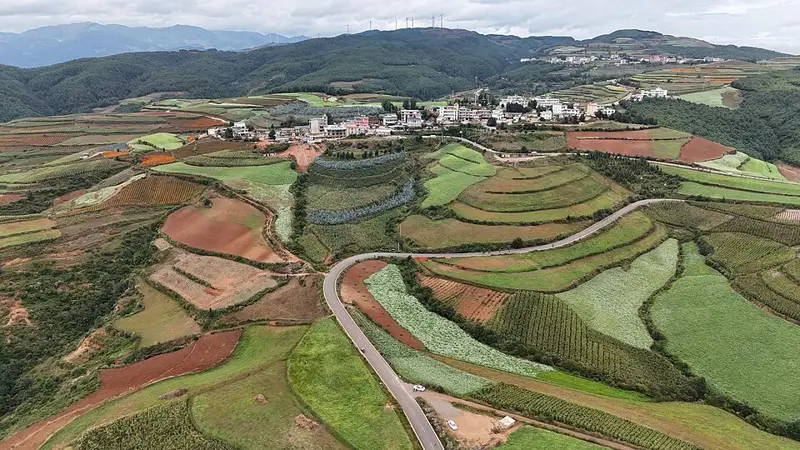
Red soil, green crops and pale field boundaries create broad stripes across the hills of Dongchuan. Unlike a flower field with one dominant colour, this landscape changes from plot to plot and from one ridge to the next.
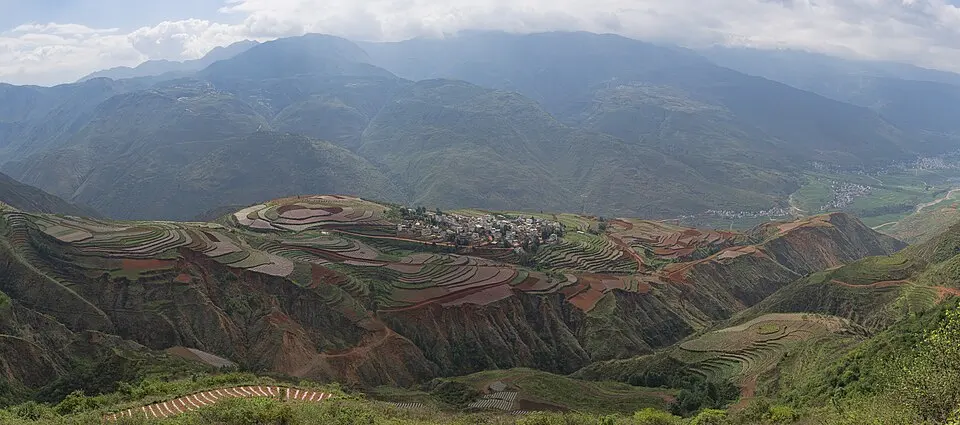

Luoxiagou is one of the named viewpoints in the wider Red Land area. The exposed earth is only part of the scene: planted fields, small settlements and the folds of the hills give the landscape its depth.
Getting There. Arrange a road transfer from Kunming to the Red Land area around Huashitou. Send the precise accommodation and viewpoint names to the driver; Dongchuan district covers a much larger area than the familiar landscape photographs suggest.
Parking. Ask the accommodation or local driver which viewpoint parking is currently usable. Allow for a walk on uneven ground. Avoid stopping on bends or blocking farm tracks between viewpoints.
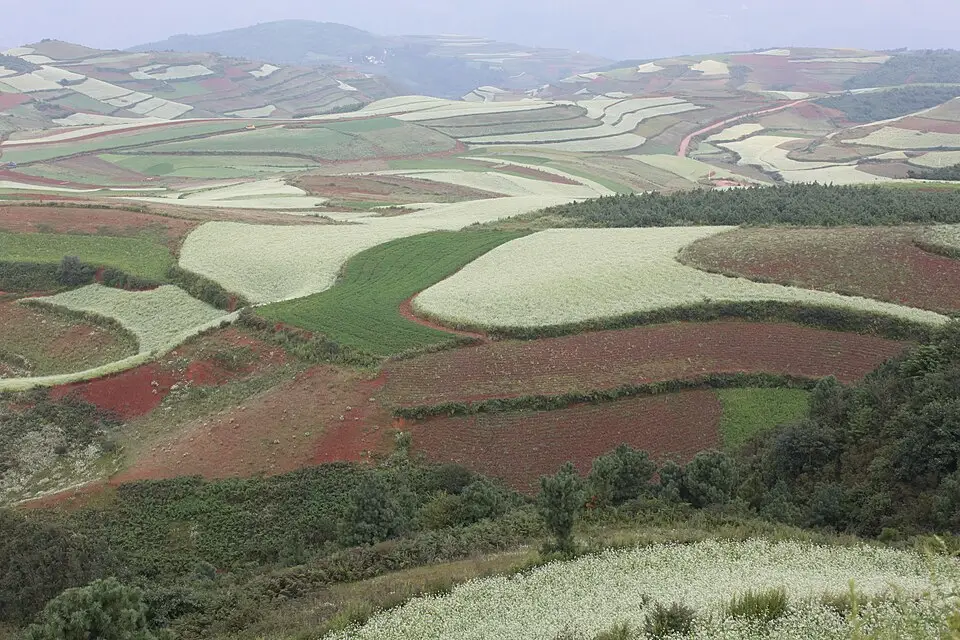

Season. May to June and parts of September to December are commonly used reference windows for contrasting soil and crop colours. The actual pattern depends on cultivation and recent weather; request recent photographs of the intended viewpoint.
Food and Dining. Guesthouses around the Red Land viewpoints are useful for arranging simple meals. Confirm meal times when booking, particularly if the plan includes sunrise or a late return.

More Location Guides
- Grassland Filming Locations in China
- Desert and Rock Filming Locations in China
- Coastal and Island Filming Locations in China
- Best Lake Filming Locations in China
- Best Mountain Locations in China for Filming and Photography
- River and Waterfall Filming Locations in China
- Historic Towns and Villages for Filming in China
- Gardens and Heritage Architecture for Filming in China
- Wetland and Mudflat Filming Locations in China
- Forest and Bamboo Filming Locations in China
- Snow and Winter Filming Locations in China
- Karst and Canyon Filming Locations in China
These credited photographs are location references, not examples of Shoot In China projects. Seasonal descriptions are general guides. Confirm current opening, access and transport arrangements for the intended travel dates.